Written by: Jin Fujisaki / Published: 2026-02-23
The history of stationery can be divided into "before Jetstream" and "after Jetstream." It's no exaggeration to say so — the impact this pen had on the stationery world was that immense. Its greatest innovation is the "Ultra-Low Friction Jetstream Ink," developed in-house by Mitsubishi Pencil.
Conventional oil-based ballpoint pens had high-viscosity ink, which forced you to "press down hard and grind the pen across the paper." Jetstream, however, reduces frictional resistance during writing by up to 50% compared to conventional products. The moment you touch the tip to the paper and glide it across, a "weightless" sensation — like skating on ice — travels right through your fingertips. Because the ink flows out dark and smooth without any pressure, the strain on your wrist and fingers is dramatically reduced, whether you're taking notes through a long meeting or copying down notes from a classroom blackboard.
| Lefties Rejoice: Astonishingly Fast Drying

image Pen-tone
Smooth-writing inks generally have a weakness: they're slow to set on the paper, smudging easily and dirtying your hand. For left-handed writers in particular, smearing ink across a horizontal line of writing — turning their notebook (and their hand) jet-black — has long been the classic tragedy of oil-based pens.
Jetstream's ink, however, is designed to soak into the paper and dry quickly. Even if you rub it with your finger immediately after writing, it resists smudging, keeping both your notebook and your hand clean. It also achieves roughly twice the black-pigment density of conventional inks, producing crisp, dark lines that are remarkably easy to read back later — another reason it's so beloved by businesspeople.
| The "Spring Chip & Twin Ball" That Prevent Ink Leaks

image PR TIMES
When you make ink this fluid, a different set of problems emerges: "ink dripping out of the tip" and "ink flowing backward inside the pen." To prevent these, the Jetstream's tip is packed with technology worthy of a precision instrument.
It features a built-in "Spring Chip" that prevents ink from leaking out of the tip, plus a "Twin Ball Mechanism" that stops backflow when writing upside-down or at upward angles. The fact that such an advanced piece of physical engineering is crammed inside a plastic pen you can buy for around 100 yen — you can't help but feel the obsessive dedication of Japanese manufacturing. That sense of stability — "no clumping, no skipped strokes from the very first character, no matter when you pick it up" — is supported entirely by this invisible technology.
| An Unadorned Standard Body, Refined for Pure Functional Beauty
image Mitsubishi Pencil
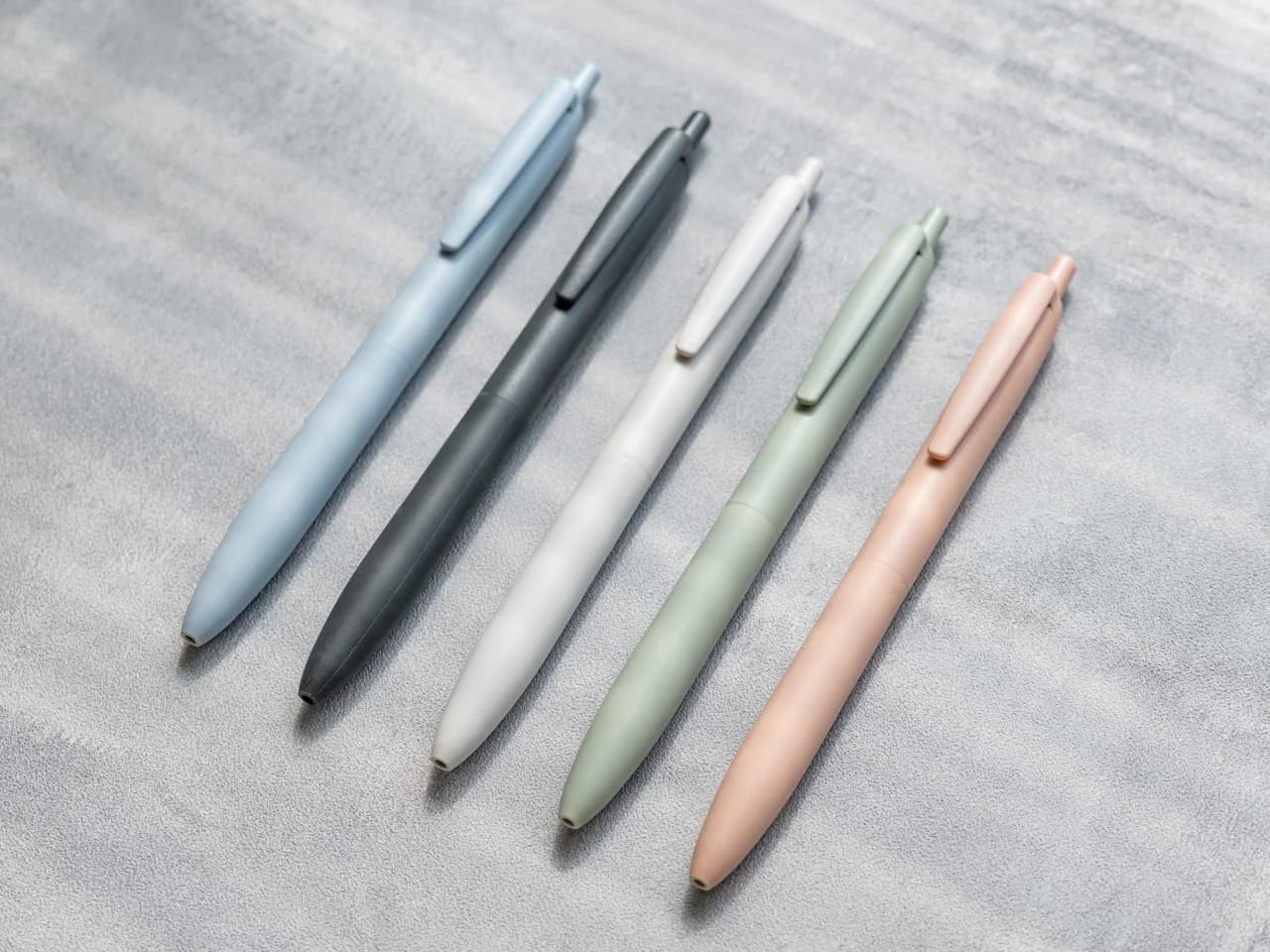
The "Single (Standard Model)" featured here, unlike the multi-color pens or the premium lineup (such as the Prime series), is the most basic design — stripped of every excess. Its streamlined, lightweight plastic body is paired with a rubber grip that conforms snugly to your fingers.
The clip is simple too, slipping easily into a chest pocket or planner. Ball tip sizes are offered in a wide range — 0.38mm, 0.5mm, 0.7mm, and 1.0mm — perfectly covering everything from tiny entries in a planner to bold strokes for addressing envelopes. It looks like a "mere office supply," but in truth its form is the optimal answer for everyday use, perfected through ergonomic design.
| In Summary: A "Crystallization of Japanese Technology" You Can Buy for 165 Yen
image Yahoo!
The price is 165 yen including tax (manufacturer's suggested retail price). At convenience stores, supermarkets, and neighborhood stationery shops anywhere in Japan, you can pick up "world-class writing performance" for that same price.
Premium fountain pens and ballpoints costing tens of thousands of yen are wonderful, of course — but the Jetstream, which you can hammer away at every day and simply pop in a new refill (a few dozen yen) when the ink runs out, is the "one true pen" for most people. There may be very few who have never tried one, but if you turn your attention back to its writing feel with fresh eyes, you'll realize just how absurdly underpriced 165 yen really is.