Written by: Jin Fujisaki / Published: 2026-02-14
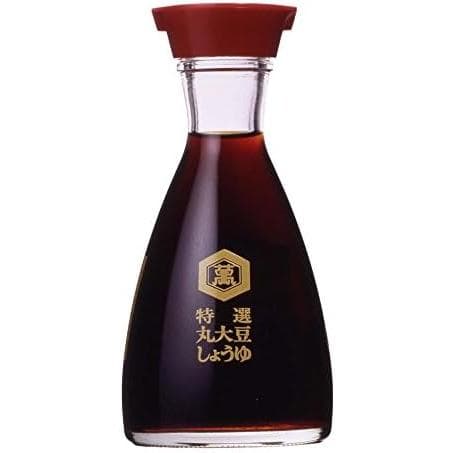
Up until the 1950s, soy sauce in Japan was typically bought in 1.8-liter (one-shō) bottles. At every meal, people would pour it from the heavy bottle into a small dish or transfer it to a ceramic soy sauce dispenser — but no matter what, it would always "drip" and stain the table. The product that solved this everyday frustration and transformed soy sauce from a "kitchen condiment" into the "star of the dining table" was this beautiful glass bottle.
Released in 1961, the "Kikkoman Soy Sauce Tabletop Bottle" was designed by Kenji Ekuan, one of Japan's most prominent industrial designers, who would later go on to design the Akita Shinkansen "Komachi" and the Narita Express, among others. Combining "beauty as a tool" with "functionality," this bottle has remained virtually unchanged for over 60 years since its release and continues to be loved around the world.
| The Secret Lies in the Angle of the "Beak": The Magic of Surface Tension

image Yahoo!
The greatest invention of this bottle lies in the spout of that iconic red cap. Look closely, and you'll see that the inside of the spout is cut in an "inverted V" shape. This precise angle is the secret to preventing drips.
The instant you tip the bottle back upright after pouring, this sharp angle harnesses the surface tension of the soy sauce, snapping the droplet cleanly off and pulling it back inside the bottle. It is said that the development team spent three years and produced over 100 prototypes searching for just the right angle. Not a single drop of soy sauce is wasted, and the table stays clean. That flawless cut-off is a piece of engineering born of the Japanese "mottainai" spirit.
| Won't Tip Over, Easy to See: A Calculated Form

image GK Design Group
There are deeper reasons behind the shape of the glass bottle below the red cap as well. The gently flaring "wider-at-the-base" form increases stability on the table, and is designed so that the bottle won't easily topple over even if a hand brushes against it.
The use of highly transparent glass also lets you see at a glance how much is left inside. And above all, the soft, curving silhouette blends seamlessly into both a Japanese meal tray and a Western tablecloth setting. The position of the slim waist, where your fingers naturally rest as you pour; the weight, just right for lifting — every detail has been calculated to make the user's gestures more graceful.
| Chosen by MoMA: "The World's Most Famous Soy Sauce Dispenser"

image GK Design Group
This design has been highly acclaimed beyond Japan as well. It has been selected for the permanent collection of the Museum of Modern Art (MoMA) in New York, recognized not merely as a condiment container but as an "outstanding industrial product."
Visit any Japanese restaurant overseas, and you'll almost certainly find this red cap on the table. Even without a common language, anyone who sees this shape immediately recognizes it as "Soy Sauce." Like the Coca-Cola bottle, it is one of those rare products whose silhouette alone tells you what's inside.
| Red for "Premium," Green for "Reduced Sodium": Color-Coded by Cap
image Recipes by Housewife A-ko
While the original sports a red cap, today there are caps in various colors to match the contents inside. Green for reduced-sodium soy sauce, yellow for whole-soybean soy sauce. The supermarket shelves are lined with colorful tabletop bottles — but every single one features the same drip-free spout.
Once you've used it up, you can simply remove the cap, wash it, and refill the bottle as many times as you like. Recently, double-walled "sealed bottles" that prevent the contents from oxidizing have also become popular, but the cleanliness unique to glass bottles and the "warmth" they bring to the dining table are still where this classic tabletop bottle wins out.
| Conclusion: Japanese Good Design You Can Buy for 300 Yen
image LADYNAFISA
The price, with soy sauce included, runs about 300 to 400 yen. Subtract the cost of the soy sauce itself, and this magnificent glass bottle effectively costs just a few hundred yen.
If you've never used one before — or if it brings back nostalgic memories of one sitting in your childhood home — please pick one up and try it for yourself. Tip it, then bring it back upright. The satisfying "snap" of the perfect cut-off in that very moment never stops feeling impressive, no matter how many times you do it. The Kikkoman Tabletop Bottle is a tiny giant — a folk-craft masterpiece that quietly supports Japan's food culture.