Written by: Jin Fujisaki / Published: 2026-02-09
When you want to jot down a passing idea, a smartphone notes app is convenient. But when you want to think deeply, or sort out what's in your head, don't you somehow find yourself wanting to return to "pen and paper"?
That's because the very act of writing on paper stimulates the brain and adjusts the speed of your thinking. Which is precisely why the notebook you use can't just be "anything." There's a real difference between a 100-yen notebook and the "MD Notebook" made by Japan's Designphil (Midori). It comes down to whether or not there is "noise" in the moment of writing. The stress of pages flipping closed on their own. The discomfort of ink bleeding through. The MD Notebook is a "white laboratory" for thought, one that has thoroughly eliminated all of that.
| A "scratchy" writing feel. Deliberately not too smooth

image Penhouse
When you hear "easy-to-write paper," you might imagine slick, glossy paper. But the "MD Paper (Midori Diary Paper)" used in the MD Notebook is different.
As you glide the pen tip across it, there's a slight, pleasant resistance — a "scratch, swish" sensation (friction). This is the greatest characteristic of this paper, which the company has been developing and refining in-house since the 1960s. If paper is too slippery, the pen slides and your handwriting falls apart, but with just the right amount of grip, you can draw lines exactly as you intend. The tactile feedback of "writing" comes through your fingertips, creating a rhythm that lets ideas keep bubbling up one after another.
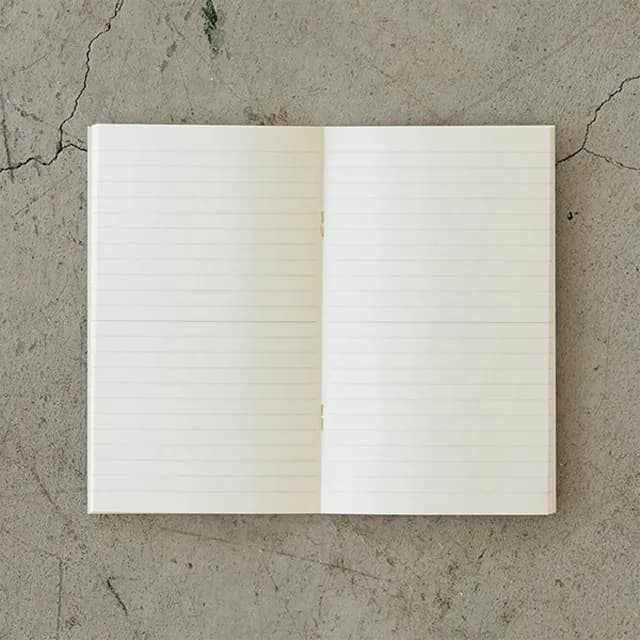
| No need to hold it down. The bliss of pages that lay flat with a "thump"

image Penhouse
When you use a cheap notebook, the pages bulge back up partway through writing, and you have to press down on them with your hand. That is a significant noise that interrupts your thinking.
The MD Notebook uses a binding method called "thread stitching." This is normally a labor-intensive technique reserved for diaries and hardcover books. Thanks to this, no matter which page you open, it lays completely flat at 180 degrees with a satisfying "thump." There is absolutely no need to hold it down with your hand. You can lay it on your desk and focus purely on writing. This stress-free construction is exactly why so many creators love it.
| Not even a cover. A boldly "pure" design

image Rakuten
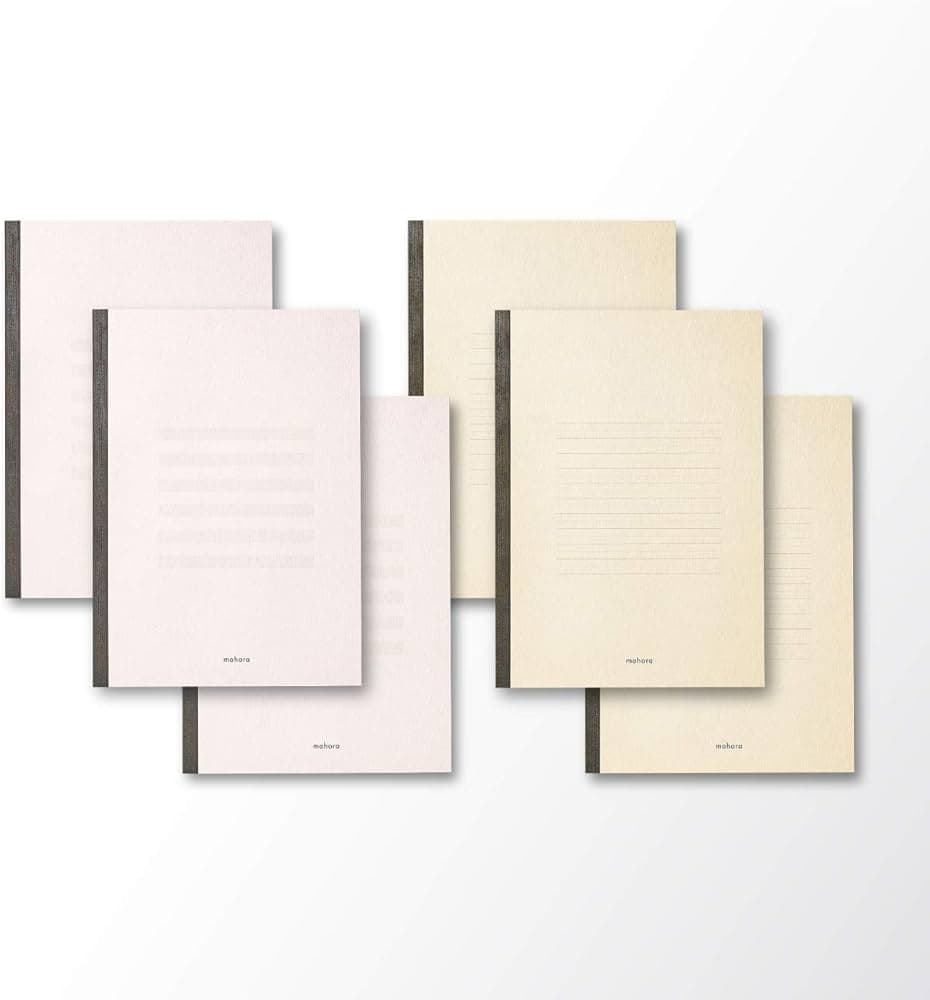
People seeing the MD Notebook for the first time may be surprised: "Wait, there's no cover?" There is no thick paper cover like you'd find on a typical notebook, and on the spine, a mesh tape called kanreisha (cheesecloth) is even left fully exposed.
This is an expression of the philosophy that "nothing matters except the writing experience." The result of stripping away every unnecessary decoration and leaving only the function of "writing" is this minimal form. When you buy it, it comes wrapped in paraffin paper (a thin, semi-transparent sheet); you can keep it on while you use it, or peel it off and enjoy the feel of the bare paper. It's a "white" canvas, ready to be colored by its user.
| Even fountain pens won't bleed through. For residents of the ink swamp
image Mainichi, Bunguten
Since this is paper that obsesses over "writing," it doesn't play favorites with pens. It performs beautifully not only with ballpoints, but also with pencils and fountain pens.
You'll almost never see "bleed-through" — ink seeping to the back of the page — or lines feathering and blurring. The time spent scratching out characters with your favorite fountain pen and ink. The MD Notebook never gets in the way of that blissful time, and it brings out the colors of your ink beautifully.
| Summary: A tool that updates your thinking

image Pen to Note
A few hundred to a thousand yen, for a single notebook. You might think that's expensive. But considering the value of the ideas born from writing in it, and the thinking it helps you organize, there's hardly a cheaper investment to be made.
Open the MD Notebook, and grip your favorite pen. In that moment, your desk transforms into a "place of creation." Why not do a digital detox and face your own handwriting again for the first time in a while? There, a new discovery awaits you — one you'll never encounter on a smartphone screen.