Written by: Jin Fujisaki / Published: 2026-02-22
Over the past few years, opportunities to spot the unfamiliar Chinese characters "楊枝甘露" (Yeung Chi Gam Lo) on the shelves of Japanese cafés, supermarkets, and even Costco and convenience stores have exploded. Known in English as "Mango Pomelo Sago," this drink is a traditional dessert invented at an upscale Hong Kong restaurant in the 1980s.
While bubble milk tea captivated young people with its "chewy texture and sweetness," Mango Pomelo Sago has secured its place in the Japanese market with a more refined, grown-up approach: "the perfect coexistence of richness and refreshment."
| The Golden Ratio of Mango, Coconut, and "Pomelo"

image ok lah
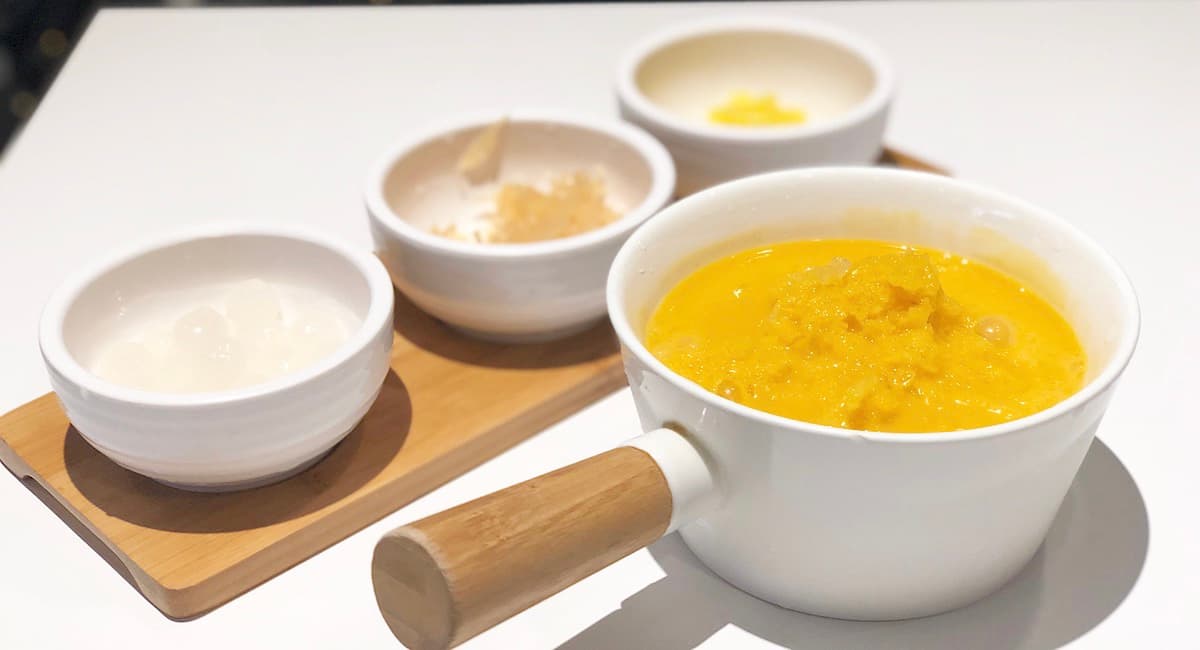
The biggest reason this drink stands apart from a mere "mango juice" lies in its complex composition. The base is a blend of thick, luscious mango purée, mellow coconut milk, and evaporated milk (unsweetened condensed milk). On its own, this would taste cloyingly sweet, but a stroke of genius adds the perfect accent.
That accent is the flesh of the "pomelo" (a citrus fruit similar to the buntan). The refreshing citrus tang that bursts in the glass, along with a faint hint of bitterness, slices cleanly through the mango's aggressive sweetness, leaving a remarkably crisp finish. Sweetness, acidity, and depth—with every sip, these elements resonate in the mouth like an orchestra. It is, quite simply, an exquisitely well-crafted "drinkable parfait."
| The Pleasant Texture of "Sago." Not Chewed, but "Savored Down the Throat"
image ok lah
Equally unforgettable is the "sago" featured in the drink's name. Sago refers to small tapioca pearls (西米) made from the starch of palm trees. Unlike the large black tapioca pearls that require you to "chew and chew until your jaw gets tired," sago is far gentler.
Just a few millimeters in diameter, these translucent pearls glide smoothly down the throat. They flow into your mouth alongside the mango purée, and the light, popping texture as you bite into them never gets in the drink's way—instead, it functions as a dangerous booster that accelerates your drinking pace. This sense of balance—"never too heavy"—is the biggest reason it's a drink you'll want to enjoy every day.
| The "Bottled" Revolution: Now Available at Costco and Convenience Stores
image Hatena Blog
What was once a dessert you could only enjoy at specialty shops or upscale Chinese restaurants is now readily available in PET bottles and other packaged formats. The launch of large-volume bottles at retailers like Costco, in particular, has popularized the easy luxury of simply "adding ice to a glass at home and pouring."
Pair it with bread at breakfast, or treat your tired brain to it after work. On a weekend afternoon, pour a glass and sip it on your balcony—and in an instant, you're transported to an open-terrace café in Hong Kong. The fact that it's packed with fruit pulp also fuels its popularity, providing the perfect excuse: "a low-guilt sweet (you're getting your vitamins!)."
| Summary: The Perfect Glass, Brimming with Asian Wisdom
image DIME
Prices range from a few hundred yen for bottled versions to around 600–800 yen per cup at specialty shops. While that's the same price range as bubble tea drinks, many argue that the generous use of fruit gives Mango Pomelo Sago the edge in satisfaction.
Mango Pomelo Sago is far too delicious to end as a passing fad—it's a crystallization of Asian wisdom. If you haven't tried it yet, be sure to pick one up the next time you spot it at a convenience store or supermarket. That rich yet refreshing first sip is sure to update your perception of Asian sweets for good.