Written by: Jin Fujisaki / Published: 2026-02-22
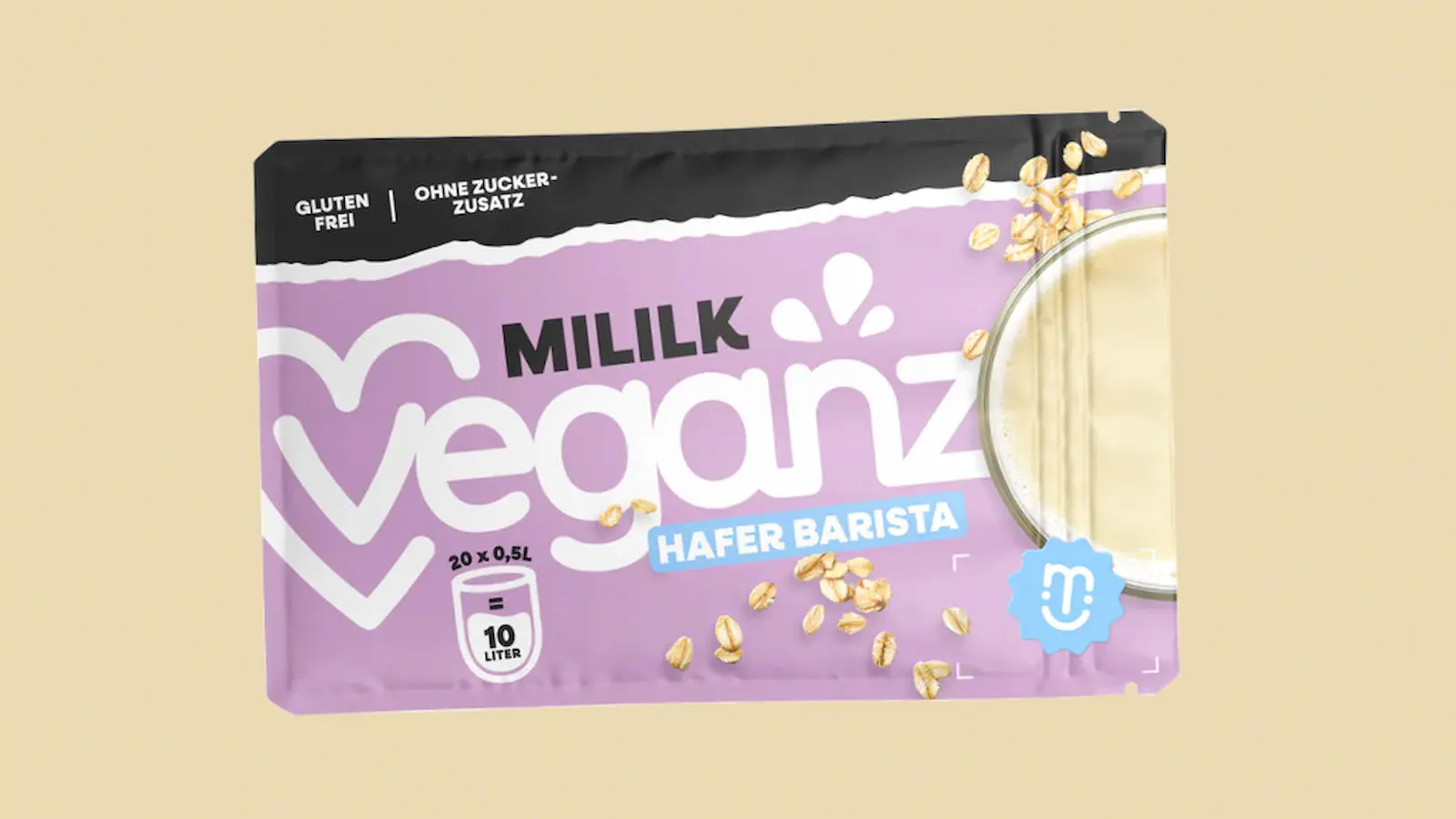
The heaviest, bulkiest item in your grocery bag? Without a doubt, it's the milk (or plant-based milk) carton. But in 2026, food tech has finally liberated us from that physical burden. "Mililk," developed by Germany's Veganz, and other "sheet-form plant milks" look at first glance like nothing more than slightly thick brown drawing paper or oversized sticky notes.
Using patented 2D printing technology, only the nutrients and flavor of oats or almonds are condensed (printed) into sheet form. Since it isn't a liquid, the packaging is just a thin paper envelope. No more occupying the large door pocket of your fridge — you can stock dozens of liters' worth of milk in a kitchen drawer. A scene straight out of science fiction has become reality.
| Just mix with water for 30 seconds — rich, "freshly pressed" oat milk anytime

image Framtiden
"Can paper really turn into milk?" I completely understand the skepticism — I was doubtful myself at first. But the preparation is almost anticlimactically simple. Tear the sheet into a blender or dedicated shaker, pour in the specified amount of water, and blend for about 30 seconds.
Open the lid, and there it is — unmistakably pure white, creamy oat milk. The taste is actually "fresher" than commercial cartoned versions. Without the distinctive flavor that comes from heat sterilization for long-term storage, the natural sweetness and toasty aroma of the oats themselves stand out. It doesn't separate when added to coffee, and you'll be amazed at how rich and smooth the mouthfeel is — rich enough to produce a perfect latte foam.
| The waste of shipping 90% "water": A brilliant answer to environmental problems

image Trend Watching
Why bother turning milk into a sheet in the first place? The answer is "water." About 90% of the dairy or plant milk we usually buy is simply water. In other words, manufacturers are packing heavy "water" into paper cartons and shipping it across the country by truck, emitting massive amounts of CO2 in the process.
By converting it to sheet form, weight and volume are reduced by over 90%. Transportation costs and greenhouse gas emissions are dramatically curbed, and the hassle of washing and disposing of empty heavy cartons (the volume of waste) drops to zero. It's not just "eco-friendly" in theory — for consumers, the overwhelming benefits of being "lightweight, easy to dispose of, and space-saving" are exactly why this technology is rapidly gaining support around the world.
| Perfect for camping and emergencies: The ultimate portable milk
image VEGAN'S LIFE
These "lightweight and non-perishable (with an extremely long shelf life)" characteristics shine well beyond everyday use. Take camping, for example. There's no need to sacrifice precious cooler space for milk. Slip a few sheets into your backpack, and you can enjoy a top-tier morning latte using spring water out in nature.
It also makes excellent emergency stockpile food. It can be stored at room temperature for long periods, and as long as you have water, you can quickly make nutritious plant-based milk — there's hardly anything more reassuring as a source of protein and calories during emergencies.
| Conclusion: An upgrade to daily life

image BondGuide
Converted to a per-liter price, it may still feel a bit pricey (around 300–400 yen). But considering it eliminates the small daily liabilities of "the stress of carrying heavy groceries," "lack of fridge space," and "throwing away leftover milk," it's more than worth the cost.
Sheet-form plant milk isn't "eco that requires sacrifice" — it's the next-generation standard that you use simply because it's convenient. The sensation of having a thick stack of milk delivered to your kitchen — please, experience this future magic for yourself at least once.