Written by Jin Fujisaki / Published: 2026-02-10
The water bottle (my bottle) you use every day. It's eco-friendly and saves money, but it has one fatal flaw. That's the "rubber gasket" on the underside of the lid.
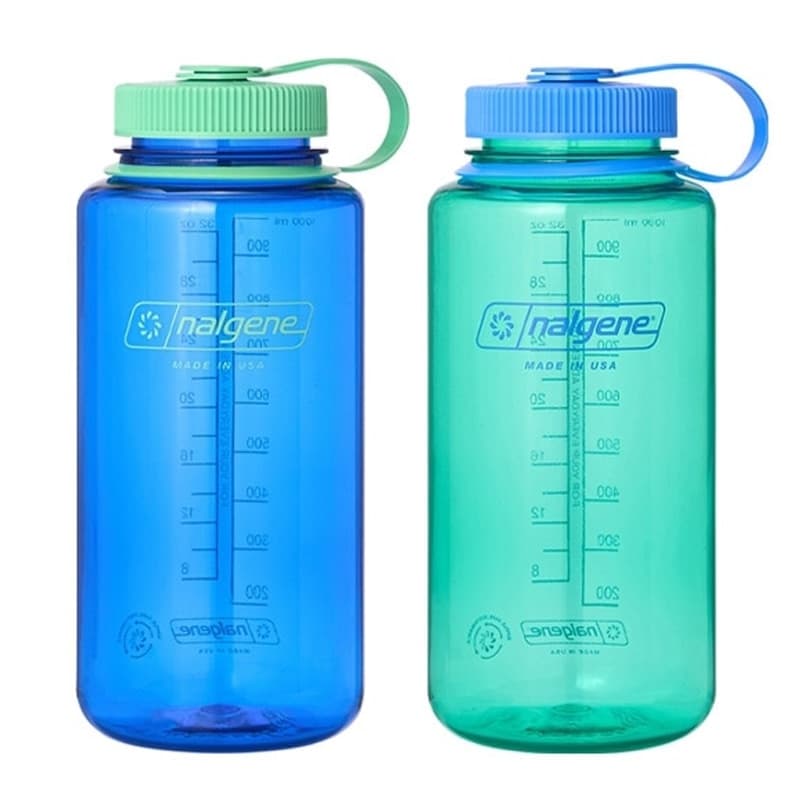
You have to remove it and wash it every time or mold grows, forgetting to put it back causes a disaster, and as it deteriorates it starts to leak. Have you ever thought, "If only that rubber ring didn't exist…"? America's "Nalgene" is the ultimate bottle that physically eliminates this worry, beloved by backpackers and campers worldwide. This bottle has no gasket. And yet, it absolutely never leaks.
| Originally a lab chemical container. The level of "sealing" is on another scale

image PLAZA
Nalgene was originally developed in American laboratories as a container for reagents and chemicals. Because leaking dangerous chemicals would be catastrophic, its airtightness was designed to a level where lives depend on it.
Its greatest feature is the proprietary "cap system" in which the threads of the body and cap mate perfectly. By utilizing the elasticity of the plastic, it's structured so that the more you tighten it, the more firmly it bites in, completely sealing in liquids without relying on a gasket (rubber). Even if you turn it upside down, shake it, or it gets squeezed inside your bag, the contents will not seep out.
| Doesn't deteriorate, doesn't mold, doesn't get lost

image HIGHMOUNT Online Shop
The benefits of having no gasket are immeasurable.
- Washing is done in an instant: Just wash the body and lid. The shape makes it hard for grime to collect in the grooves.
- No mold growth: Without rubber parts that trap moisture, it stays hygienic.
- No deterioration: No need to worry about gaskets stretching or tearing—it can be used semi-permanently.
- Nothing to forget to attach: The tragedy of "forgetting to put on the gasket and soaking your bag" simply can't happen.
Precisely because the structure is simple, there's nothing that can break.
| Won't crack if you step on it. Boiling water and freezing both OK

image Comfortable Outdoor Plan
The material used is "saturated polyester resin." Its purity is extremely high, and its durability is said to be such that "even being run over by a car won't crack it"—a step beyond "even an elephant stepping on it can't break it." A simple drop won't even leave a scratch.
The heat-resistance temperature is 100°C, and the cold-resistance is -20°C. You can pour boiling water in and use it directly as a "hot water bottle," or freeze water inside to use it as a substitute ice pack. (*When pouring boiling water, beware of burns and avoid handling it with bare hands.)
| The choice of carrying "room-temperature water"

image HAPPY PLUS
The Nalgene bottle has no insulation function for keeping things hot or cold. It's just a plastic cylinder. But that, in turn, becomes a benefit.
Unlike a stainless-steel vacuum flask, it isn't heavy—it's astonishingly light (about 180g). And it helps you build the habit of drinking "room-temperature water" that doesn't chill your body. During desk work, drinking cold water every time you get thirsty tends to upset your stomach, but room-temperature water lets you hydrate gently. Because the mouth is wide, it's also great for use as a protein shaker or as a canister for storing dry goods like coffee beans or pasta.
| Summary: A lifetime bottle for 2,000 yen

image 14select
The price for the 1.0L size is around 2,000 to 2,500 yen. You can buy it for less than half the price of a stainless-steel bottle, with even greater durability.
Buy it once, and there's no need to replace gaskets, no fear of breakage, and you can probably keep using it for the rest of your life. "Doesn't leak," "lightweight," "easy to clean." By relentlessly pursuing the essential functions demanded of a water bottle, it arrived at a form as simple as possible. The Nalgene bottle is the perfected form of a tool.