Written by: Jin Fujisaki / Published: 2026-02-16
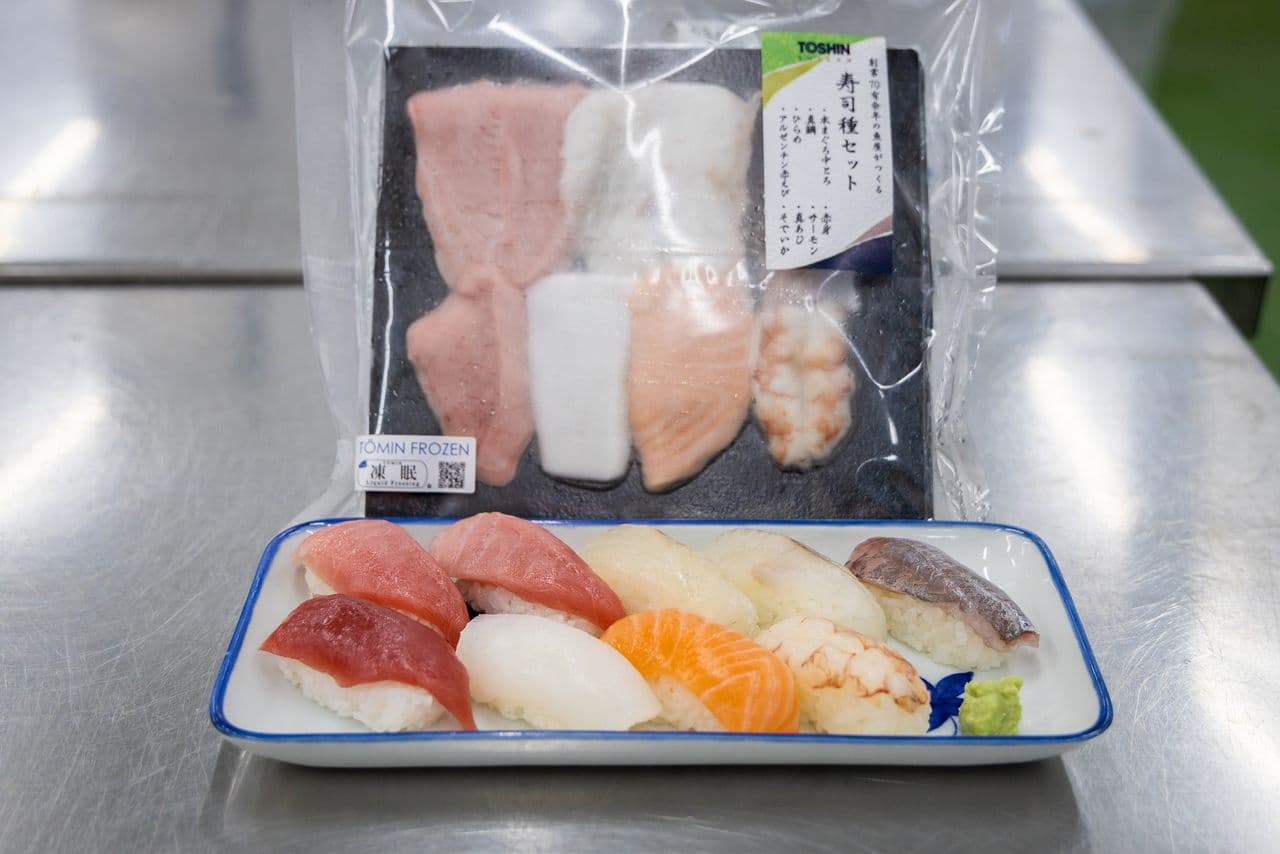
"Microwaving sushi." The moment you hear those words, most people probably picture simmered fish and a piping-hot lump of rice. But the latest frozen sushi is different. You place it in the microwave still in its packaging, heat it for the specified time (say, 30 seconds), take it out, and bring it to your mouth—and a small miracle has occurred.
The shari (sushi rice) is body-temperature warm and crumbles softly apart, while the neta (topping) remains chilled and raw. How is this even possible? It works by turning the microwave's tendency to react with "moisture" and generate heat on its head. By exploiting the difference in moisture content between the topping and the rice, along with using container shapes that control the microwaves, it deliberately creates an almost magical pattern of uneven heating—warming only the rice while leaving the fish untouched.
| The Freezer as a "Time Capsule": Flash-Freezing Without Destroying Cells

image nippon
Why couldn't sushi be frozen in the first place? The greatest enemies were "drip" (the loss of umami compounds) during thawing, and the "starch retrogradation" of the rice (the dry, crumbly phenomenon). With conventional slow freezing, ice crystals grew so large they would rupture the cell membranes of the fish.
But cutting-edge flash-freezing technologies that use magnetic fields and electromagnetic waves—such as CAS freezing and Proton freezing—have made this problem a thing of the past. They instantly freeze the water within the cells while keeping the crystals microscopic. As a result, the moment you thaw it, the sushi returns to a "just-pressed" state. This isn't preservation—it's technology that stops time. Fish caught at Japanese fishing ports can now be delivered to households around the world with their freshness intact.
| The Aroma of Vinegared Rice: Justifying the Act of "Warming"
image Kanazawa Maimon Sushi
It's easy to forget when you're used to conveyor-belt sushi or supermarket packaged sushi, but originally, sushi (especially Edo-mae) lives and dies by being served at body temperature. When the shari is cold, the aroma of the vinegar doesn't bloom, and the sweetness becomes hard to perceive.
The greatest achievement of "microwaveable sushi" lies in recreating this "temperature contrast" at home. Rather than cold shari straight from the refrigerator, shari that has been vibrated at the molecular level by the microwave becomes airy and fluffy, blending in your mouth with the topping. This isn't a microwave that "thaws something cold"—it's a microwave that brings the food to "the temperature where it tastes best."
| The 2 a.m. Counter: Reducing Food Loss to Zero

image PRTIMES
The counter at a sushi restaurant isn't open 24 hours a day. But if you have this sushi in your freezer, you can enjoy authentic nigiri at 2 a.m. or in the early morning. The shelf life is measured in months. Whenever a craving strikes, you head straight to the microwave.
This isn't just about convenience—it's also an answer to the serious problem of food waste. The mountains of unsold sushi discarded by supermarkets could potentially be reduced to zero with freezing technology. Thaw only what you need, only when you need it. It's the most luxurious—and the most eco-friendly—way of enjoying sushi.
| Conclusion: The Moment a Master Chef Pressed It, Right in Your Home

image TBS Television
The price sits higher than supermarket packaged sushi, but lower than the counter at an upscale restaurant. Its true value, however, lies in having "a sushi master always by your side."
The moment you take it out of the package, a faint scent of vinegar drifts up from the microwave. It's a new form of fine dining, born from what was once considered a forbidden act. If you spot the words "microwave only" in the frozen food aisle, take a chance and toss it in your basket. Thirty seconds later, your dining table will be transformed into a sushi restaurant in Ginza.