Written by: Jin Fujisaki / Published: 2026-01-31
Now that plastic bags come with a fee, carrying an eco bag has become part of daily life. But the real problem starts after you've used it. Folding it neatly along its creases and stuffing it into its tiny pouch—this "shutdown procedure" is so tedious that most of us end up crumpling it into a ball and tossing it into our bag.
The "Shupatto," developed by household goods maker Marna, automates this process to its logical extreme. The only action required is pulling both ends. In an instant, the bag aligns into a neat strip, and all that's left is to roll it up. This isn't magic—it's a triumph of geometry and engineering.
- | The "Program" Embedded in a Pleated Structure
- | Why This Shape?
- | You'll Want to Say "Shupa!"
- | Who Is It For?
- | Summary | "Storing" Fabric
- Related Information
| The "Program" Embedded in a Pleated Structure

image Shupatto
The Shupatto is, at its core, a polyester bag treated with a specialized pleating process.
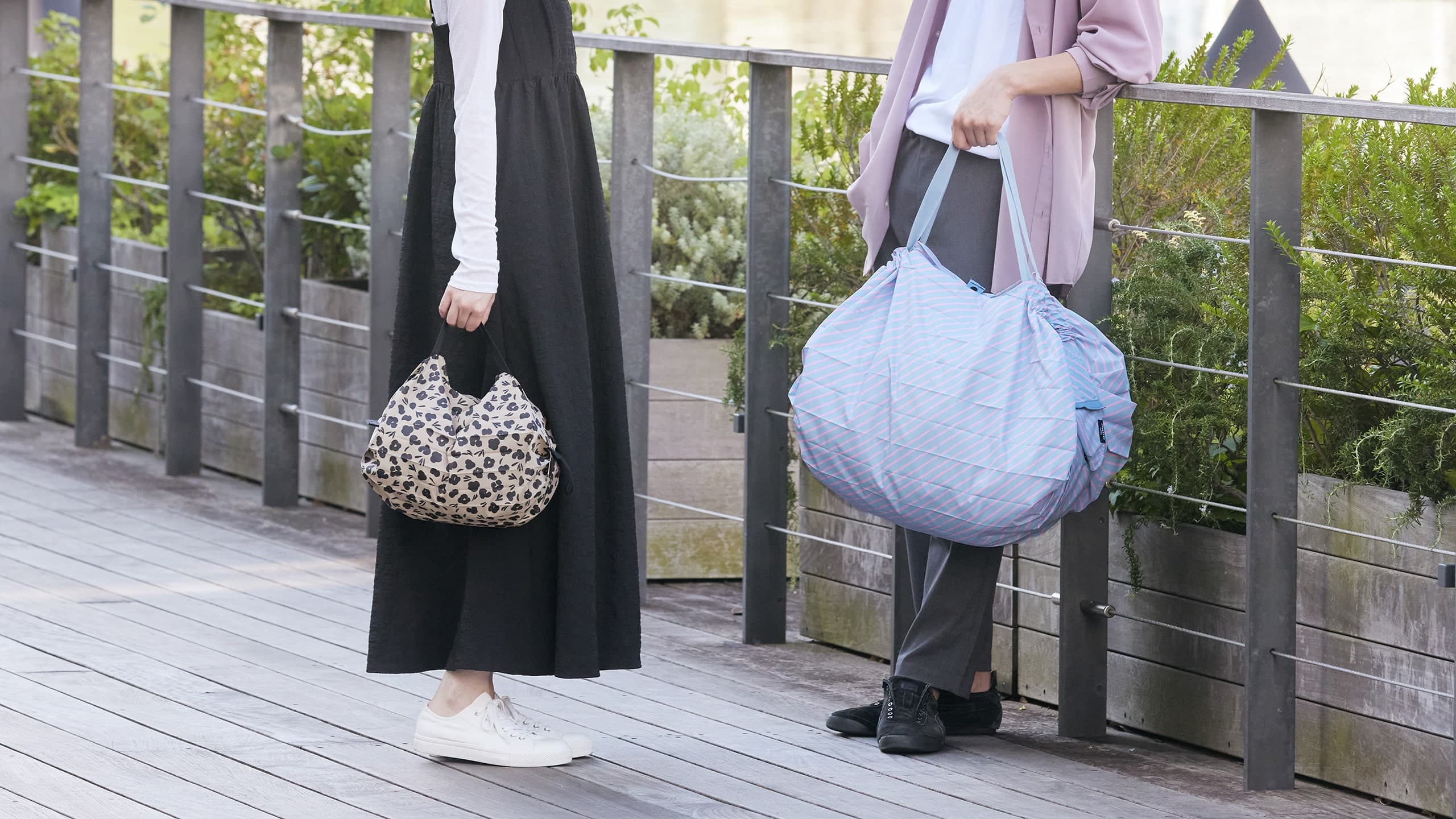
Fabric is normally amorphous and unruly. But the Shupatto has a "program" for how it should move, physically written into it as creases. When loaded with groceries, the bag's weight expands it into a rounded shape, securing ample capacity. Once you remove the contents and pull the two ends (the tape sections) outward, the pleats snap shut all at once, transforming the bag into a single rigid "rod."
The product's greatest invention is converting the complex task of "folding" into the simple input of "pulling."
| Why This Shape?
image Shupatto
Every aspect of the Shupatto's design follows function.
- Accordion-style pleats: The creases function almost like shape memory, so the bag never loses its "folding route" no matter how many hundreds of times you use it.
- Gravity-based closure: When loaded, the handles cinch together and the mouth of the bag naturally closes. Using gravity alone—no zippers or buttons—to keep contents from spilling is a brilliant piece of design.
- Scalable size range: From the S size for a convenience store bento to the L size that fits a shopping basket. The structure (source code) stays the same, scaled to suit each use case.
| You'll Want to Say "Shupa!"

image Shupatto
Using a Shupatto turns the post-shopping "tidy-up" into entertainment.
Take the groceries out, grab both ends of the empty bag. Yank them apart with a swift "Shupa!" In that instant, what was a crumpled mess straightens into a crisp, perfect line. This physical satisfaction—the haptics of it—is genuinely addictive.
Once neatly folded, it looks like a tiny roll cake just a few centimeters in diameter. It slips into a gap in your bag and waits quietly for its next deployment.
| Who Is It For?
image Shupatto
This product is recommended for anyone who loves efficiency.
- The meticulous slob: Anyone caught between the desire to "fold things neatly" and the feeling of "ugh, what a hassle."
- Gadget enthusiasts: Anyone who finds romance in "transforming mechanisms" that turn the complex into the simple in an instant.
- Male users: Anyone who finds the "domestic" vibe of conventional eco bags off-putting and is looking for a bag that's cool as a tool.
| Summary | "Storing" Fabric
image Shupatto
So, what do you think?
The Shupatto isn't an eco bag. It's a "transport module" that carries your goods and, once used, stores itself at minimum size.
It transforms the housework of "folding" into a moment of instant gratification. This device, costing just a few hundred yen, will dramatically smooth out the last mile of your shopping experience.