Written by: Jin Fujisaki / Published: 2026-02-11
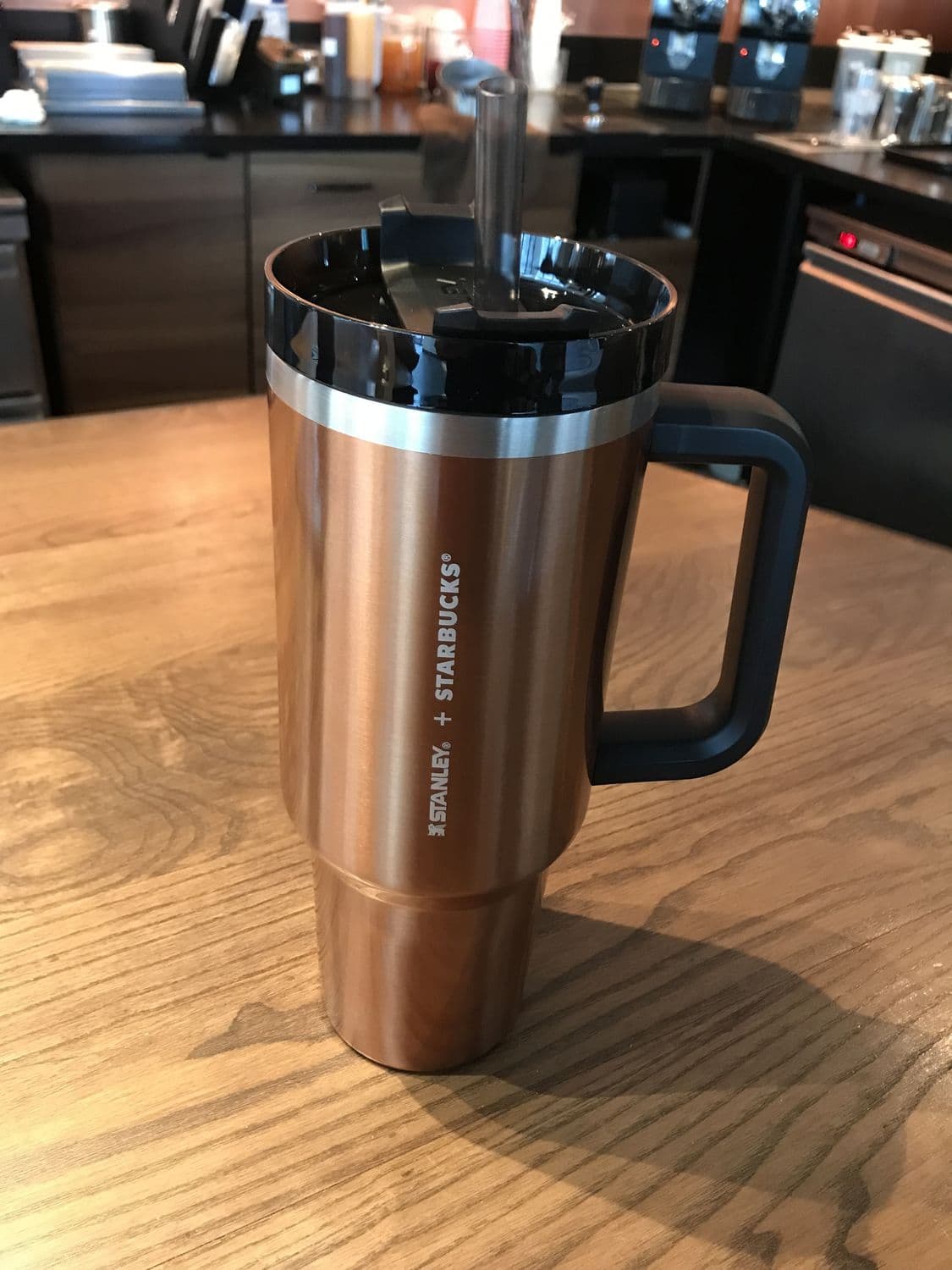
"I dropped my water bottle and it shattered." If that sounds familiar, make Stanley your next choice. Invented in America by William Stanley Jr. in 1913, this bottle has accumulated a host of almost unbelievable legends.
"Survived a fall from 12,000 meters." "Wasn't crushed even after a truck ran over it." "Stopped a bullet and saved its owner's life." These aren't just rumors — they're stories that have actually been passed down. The rugged body, combining vacuum insulation technology with steel, doesn't flinch at minor impacts. No other water bottle wears the phrase "a lifetime companion" quite as well.
| Morning's boiling water is still steaming by evening

image BUYMA
It's not just tough. The true essence of Stanley lies in its overwhelming heat- and cold-retention power.
In the morning, you brew coffee with boiling water and head off to work. In the evening, exhausted from overtime, you open the lid — and steam still rises from the cup. That kind of experience becomes a part of daily life. The vacuum-insulated structure, often called the original thermos, completely blocks out the outside temperature. In summer, drop in some ice and it's not unusual to find ice still left the next day. The stress of "having to drink lukewarm beverages" simply disappears from your life.
| The scuffed "Hammertone Green" is beautiful
image Gift Mall
Stanley's signature look is its distinctive deep green color and its textured, bumpy paint finish. Known as "hammertone finish," it's characterized by a pattern that looks as though the surface has been struck with a hammer.
This finish serves two purposes. One is to provide grip — even with gloves on, it doesn't slip. The other is to disguise scratches and turn them into character. A polished stainless steel bottle starts to look shabby once it gets scratched, but a Stanley only gains more presence as a well-used tool the more battered it becomes. Whether soot from a campfire stains it on a camping trip, or the paint chips from being knocked against a rock, that's exactly what makes it cool.
| The toughest way to ditch plastic
image Fashion Press
Buying a plastic bottled drink is convenient. But once you finish it, it's just trash. And it can't keep your drink hot or cold.
Owning a Stanley is also a statement about the environment. "Don't throw it away." That conviction is embodied in its steel body. The mouth is built wide, so large ice cubes fit right in and it's easy to clean. Precisely because it's something you use every day, a tough, easy-to-keep-clean structure matters.
| Replaceable parts. Designed for a lifelong relationship.

image Shoplist
"Built to be passed down to your grandchildren." That's Stanley's tagline. True to those words, consumable parts like gaskets and inner stoppers are still available for individual purchase today.
The body itself almost never breaks, but rubber gaskets can wear out over time. When that happens, instead of replacing the whole bottle, you can swap out just the gasket for a few hundred yen and restore it to like-new performance. It's because this culture of "repair and keep using" is so deeply rooted that the brand has been loved for over a hundred years.
| Conclusion: Its weight is a mark of trust
image Gift Mall
Honestly, it's heavy. Compared with the latest titanium or lightweight plastic bottles, you definitely feel the heft. But that very weight is proof of its promise to "protect what's inside."
In the office, on a construction site, or at a campground — just having one Stanley on hand brings a reassuring sense that "my drink is safe." You'll never have to agonize over choosing a water bottle again. This is the final form of the water bottle that humanity has arrived at.