Written by: Jin Fujisaki / Published: 2026-02-13
That little red bottle on the table at family restaurants, or the one tucked into your pizza delivery. It's so familiar that you've probably dismissed it as "just a spicy condiment." But in fact, its contents have been protected as a "traditional craft," made by a single family on a single piece of land—Avery Island, Louisiana—ever since its creation in 1868.
Few people realize that this liquid, which you can buy at the supermarket for a few hundred yen, is actually crafted with as much care and time as whisky or wine. Tabasco isn't a sauce blended in a factory like an industrial product—it's a living "agricultural product" and a "fermented food."
| Just Three Ingredients. Slumbering in Oak Barrels for "Three Years"

image ProFoods
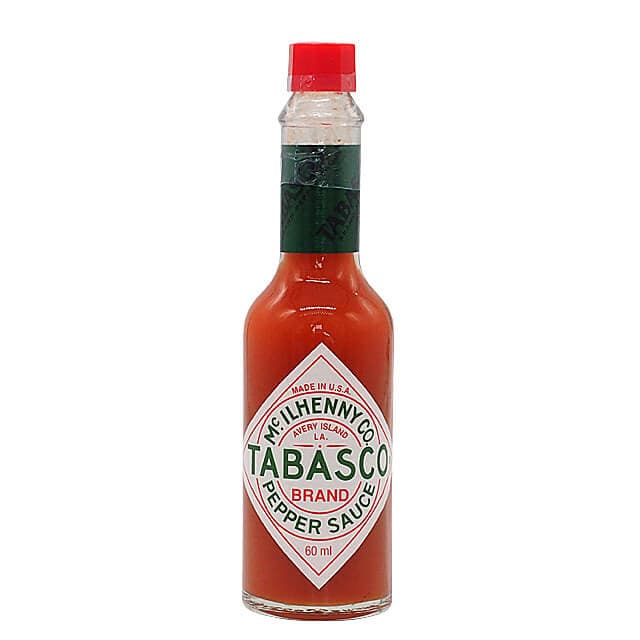
Take a look at the Tabasco label. The list of ingredients is astonishingly simple: "Chili peppers, vinegar, salt." That's all. No preservatives, no coloring—nothing else.
But the production method is extraordinary. The harvested red Tabasco peppers are crushed, mixed with locally sourced rock salt, and then—remarkably—packed into "white oak barrels" to age and ferment for three years. Not three months. Three years. This long maturation period is precisely why Tabasco has its distinctive umami and depth. The weight of time sets it apart from a chili sauce that's merely hot.
| Fermented Umami, Closer to "Miso" or "Soy Sauce"
image Iemone
There's a reason Japanese people are drawn to Tabasco: it's a "fermented food," just like miso and soy sauce.
During the three years it ages in the barrel, the sharp heat of the chilies mellows, and yeast activity gives rise to complex aromas, acidity, and amino acids (umami). That distinctive tangy fragrance isn't simply the smell of vinegar—it's a rich aroma born from fermentation. That's exactly why it pairs so powerfully with umami-rich foods like cheese and meat dishes.
| The Magic of One Drop at a Time, Born from a Perfume Bottle
image Tokubai
The reason the Tabasco bottle has such a distinctive shape is said to be that, when the founder first bottled the sauce, he reused the "empty cologne bottles" he had on hand. The shape is functionally clever, too.
The plastic valve (sprinkler) on the spout is designed so that even when you shake the bottle, the sauce never gushes out—it always comes out "drop, drop," one drop at a time. This both prevents air from entering the bottle and oxidizing the contents, and lets the user fine-tune the level of heat. An idea from a 150-year-old perfume bottle is still alive and working today.
| Not Just Pizza. "Raw Oysters" Are the Ultimate Partner
image Instagram
In Japan, the image of "Tabasco = pizza and pasta" is strong, but the classic pairing in its homeland of America is different: "raw oysters." Tabasco originally became popular as a sauce for masking the funkiness of raw oysters and bringing out their umami.
Surprisingly, it also pairs well with "Japanese cuisine." Try it on nikujaga, natto, grilled fish, or even as a condiment for soba and udon. Use it with the same feeling as "adding a drop of soy sauce." Thanks to the synergy between fermented foods, the flavor deepens to a surprising degree. Drizzling it over vanilla ice cream for a sweet-and-spicy "grown-up dessert" is another connoisseur's pleasure.
| Conclusion: A Three-Year Miracle You Can Buy for 200 Yen
image DIME
A small bottle (60ml) costs around 200 to 300 yen. The fact that you can buy an aged food that's been resting in a barrel for three years for the price of two cans of juice can only be called a miracle.
The next time you pick up that red bottle, remember: it was grown on a Louisiana island, weathered three winters inside a barrel, and crossed the ocean to reach your table. Tabasco isn't just a liquid for adding heat to food. It's a magic little bottle that sprinkles "time" and "passion" onto your dining table.