Written by: Jin Fujisaki / Published: 2026-02-16
Choosing "soy," "almond," or "oat" at Starbucks or the convenience store has become totally routine. But each one has its trade-offs. Soy milk has that beany smell, almond milk has a heavy environmental footprint, and oat milk often has vegetable oils added to give it richness. "Isn't there something more natural, something closer to real cow's milk?" The answer is this hybrid milk, made by blending oats with the key ingredient of Spain's traditional beverage, "horchata."
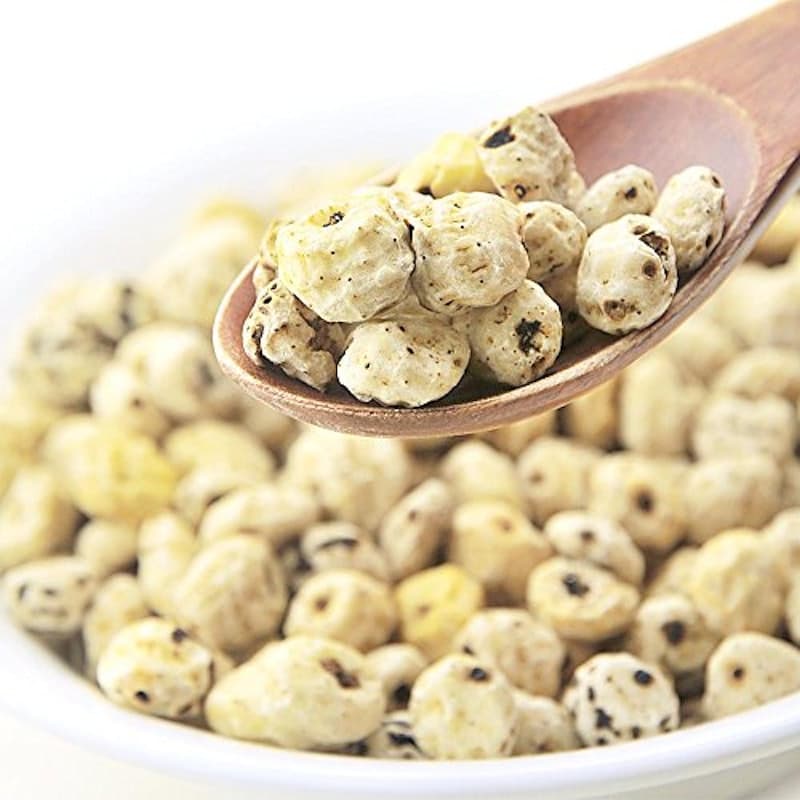
The name is "tiger nut," but it isn't actually a nut (a tree seed). It's a "tuber" — a relative of the potato or lotus root, in other words, a vegetable. Who would have imagined that this tiny, wrinkled little nugget would become the savior of the plant-based milk world?
| Why Is It So Rich Without Added Oils?

image mybest
Take a look at the ingredients on a carton of oat milk. Don't you see "sunflower oil" or "rapeseed oil" in there? Oats alone produce too thin a result, so oils have to be added to recreate the richness of cow's milk.
Tiger nuts are different. About 25%–30% of this tuber is made up of "high-quality plant fats (oleic acid)." That means simply blending it with oats produces a natural creaminess, with no need for additives. Rather than being "a liquid of water and powder mixed together," it's emulsified by the fat content inherent in the ingredient itself, so the texture on the tongue is overwhelmingly smooth.
| Sugar-Free, Yet Surprisingly Sweet
image RDsupport
If you're someone who thinks "I can't drink it unless it's sweet," don't worry. Tiger nuts have such a strong natural sweetness that they were even prized as a precious source of sweetener in ancient Egypt.
Add to that the gentle sweetness of the starches in oats. Even though there's no sugar or syrup added at all, the moment it hits your tongue you'll find yourself saying, "Wait — this is sweet!" Yet that sweetness isn't cloying; the finish is clean and crisp. Add it to coffee and you have a complete latte without any sugar at all. For anyone watching their weight, this is revolutionary news.
| The Paradox: Even People with "Nut Allergies" Can Drink It
image ITANSE
It's often misunderstood because of the name, but as mentioned above, this is a relative of the potato. In other words, even people with "nut allergies" to walnuts, almonds, and the like can drink it.
Of course, people with soy allergies and dairy allergies are fine too. (※ You do need to watch out for gluten contamination from oats, but many products are certified gluten-free.) In school lunches and cafés, no one has to worry about checking the allergen labels — "everyone can drink the same thing." That inclusive quality is exactly why it's being called the next-generation standard.
| The "Frothing" Quality That Even Baristas Endorse
image smartlog
The biggest weakness of plant-based milks has always been that they "don't froth well." Try to make a cappuccino, and the foam disappears almost immediately. But tiger nut oat milk, thanks to its abundant starches and fats, produces a fine-textured microfoam.
When steamed, it produces a glossy foam that rivals cow's milk, and you can even pour latte art with it. It also resists separating under heat, making it excellent as a base for warm stews and gratins. The era of "putting up with a substitute" is over. You choose this because it's delicious. The proof is the fact that baristas everywhere are starting to adopt it.
| Conclusion: Worth ¥800 a Liter

image amanaimages
The price runs three to four times that of regular cow's milk. It's by no means cheap. But with supplement-grade nutrition (dietary fiber, vitamin E), kindness to the environment, and — above all — the simple fact that it's "delicious," it makes a strong case for itself.
Just having a carton of this in the fridge turns your morning coffee into something special. If you've been avoiding it because "I thought it was a nut," try it just once. What you'll find is, in truth, a sweet and rich "vegetable juice" grown down in the soil.