Written by: Jin Fujisaki / Published: 2026-02-19
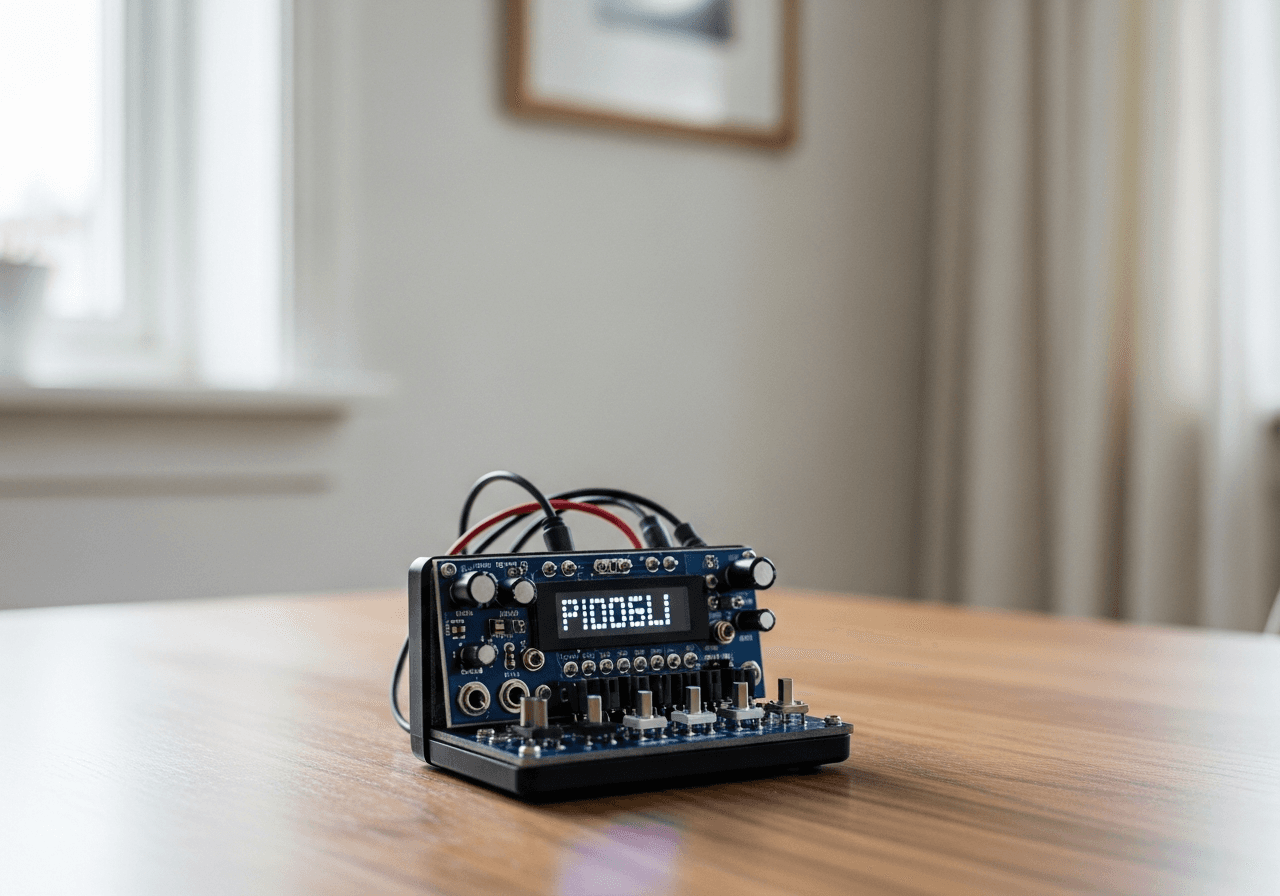
For people with food allergies, eating out or grabbing a bite from a street stall—where no ingredient list exists—is like playing Russian roulette. But with this lipstick-sized device, "Allergen Alert," there's no need to be afraid anymore. It's simple to use: just hold the sensor close to your food (or take a small sample) and press the button.
The built-in cutting-edge "Near-Infrared Spectroscopy sensor (NIR)" scans the molecular structure of the target. It can detect even invisible soup extracts or trace allergens dissolved in frying oil (cross-contamination). Verdicts like "Contains wheat" or "Dairy: high concentration" appear instantly on your paired smartphone screen. Technology frees you from the awkwardness of repeatedly questioning waitstaff and from the terror of anaphylactic shock caused by accidental ingestion.
| Covers 28+ allergens. Build your own personal "No-Go List"

image Gizmodo
What makes this device remarkable is the breadth of allergens it can detect. Earlier simple checkers were single-purpose, handling "gluten only" or "peanuts only," but Allergen Alert lets you customize the detection targets via the app.
It covers not just the seven major allergens—eggs, milk, wheat, buckwheat, peanuts, shrimp, and crab—but also walnuts, cashews, fruits, and more than 28 items classified as "specific ingredient equivalents." On top of that, the AI learns each user's "tolerance threshold," delivering personalized judgments tailored to your constitution—anything from "factory-level cross-contamination is OK" to "must be completely free of the allergen." It's essentially like carrying your own personal registered dietitian in your pocket.
| Breaking the language barrier. A passport for international travel
image Gizmodo
For people with allergies, traveling abroad has always been a high hurdle. Even when you think you've communicated "No peanuts," the allergen might be hidden in a local seasoning, or the language barrier may get in the way. But Allergen Alert doesn't rely on language.
Scan a pad thai at a Thai street stall. Check a sauce at a Parisian café. Chemical analysis results are a truth that transcends language. If a dangerous ingredient is detected, it even features an alert-card function that displays "I cannot eat this" in the local language, ready to show to staff. With just this one device, you can set off on a (safe) adventure to enjoy gourmet food from around the world.
| Carry it forever. The smarts of zero charging

image Mashable
Because it's something you carry every day, the usability has been refined. The device itself contains no battery; you attach it to the back of your smartphone via MagSafe (or a dedicated magnet), and it's powered by faint electricity received through NFC.
In other words, no charging management required. As long as you have your phone, you can scan anytime, anywhere. Its minimal design looks perfectly natural dangling from your bag as a keychain, and when you pull it out at the dinner table, it doesn't feel as ostentatious as a "medical device." Protecting yourself smartly, yet reliably—that's the 2026 style.
| Summary: A "guarantee on your life" for 30,000 yen
image Amazon
The price is around $299 (roughly 45,000 yen). It's not cheap, but considering hospitalization costs from accidental ingestion and the psychological burden of always carrying an EpiPen, there's no investment more worthwhile than this.
Especially for parents sending off children with allergies, Allergen Alert becomes the ultimate good-luck charm. "You can eat this." The happiness of being able to say those words with confidence. This small cane that achieves food accessibility has the power to change the lives of everyone who battles allergies.