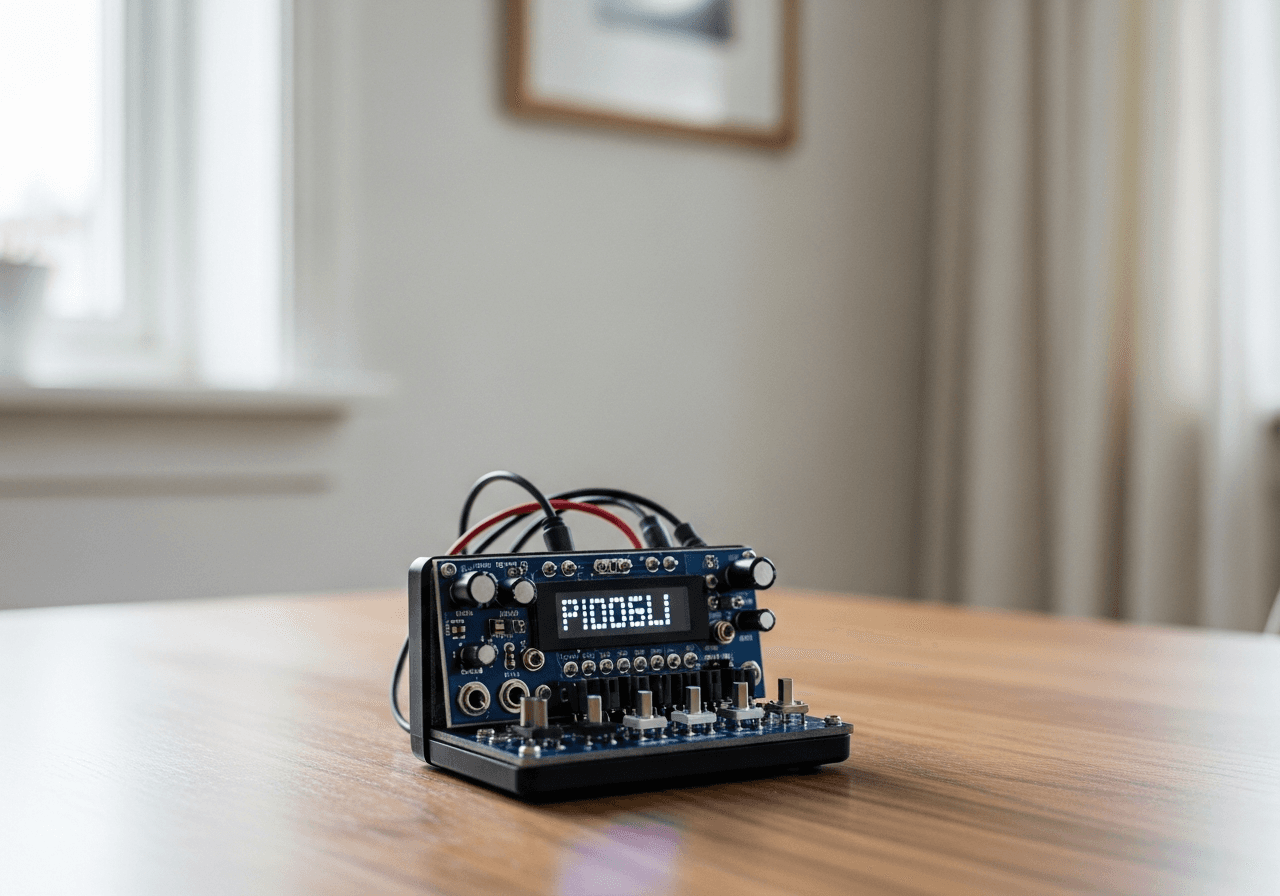
A circuit board barely bigger than a business card, packed with tiny switches and knobs, a monochrome LCD where a pixel-art character bounces along. Swedish company teenage engineering's "Pocket Operator" series looks, at a glance, like a toy. What's inside, though, is a genuine synthesizer, drum machine, or sampler.
A bare circuit board, worn as the instrument itself
No case hiding the board — it's left fully exposed. A design choice that should read as cheap instead became the thing's whole identity.
The series spans 9 models, split roughly into three families.
- Synthesizers: PO-14 sub (bass synth), PO-16 factory (melody & lead synth), PO-20 arcade (arcade-style synth), PO-28 robot (8-bit synth)
- Rhythm machines: PO-12 rhythm, PO-24 office, PO-32 tonic
- Samplers: PO-33 K.O! (built-in microphone sampler), PO-35 speak (vocal synth sampler)
Every model runs on two AAA batteries and has a built-in speaker plus a headphone jack. In Japan, prices start around ¥14,850. Small enough to fit in one hand, yet capable of serious enough sound design to hold its own on a live stage.
The design behind 16 steps × 16 patterns
At the core of every Pocket Operator is a simple structure: 16 steps make one measure, and 16 of those measures combine into a full composition. Behind the game-like screen where a pixel character bounces to the beat sits a set of features solid enough for live performance — real-time effects, and sync between multiple units.
A bigger world when units are lined up
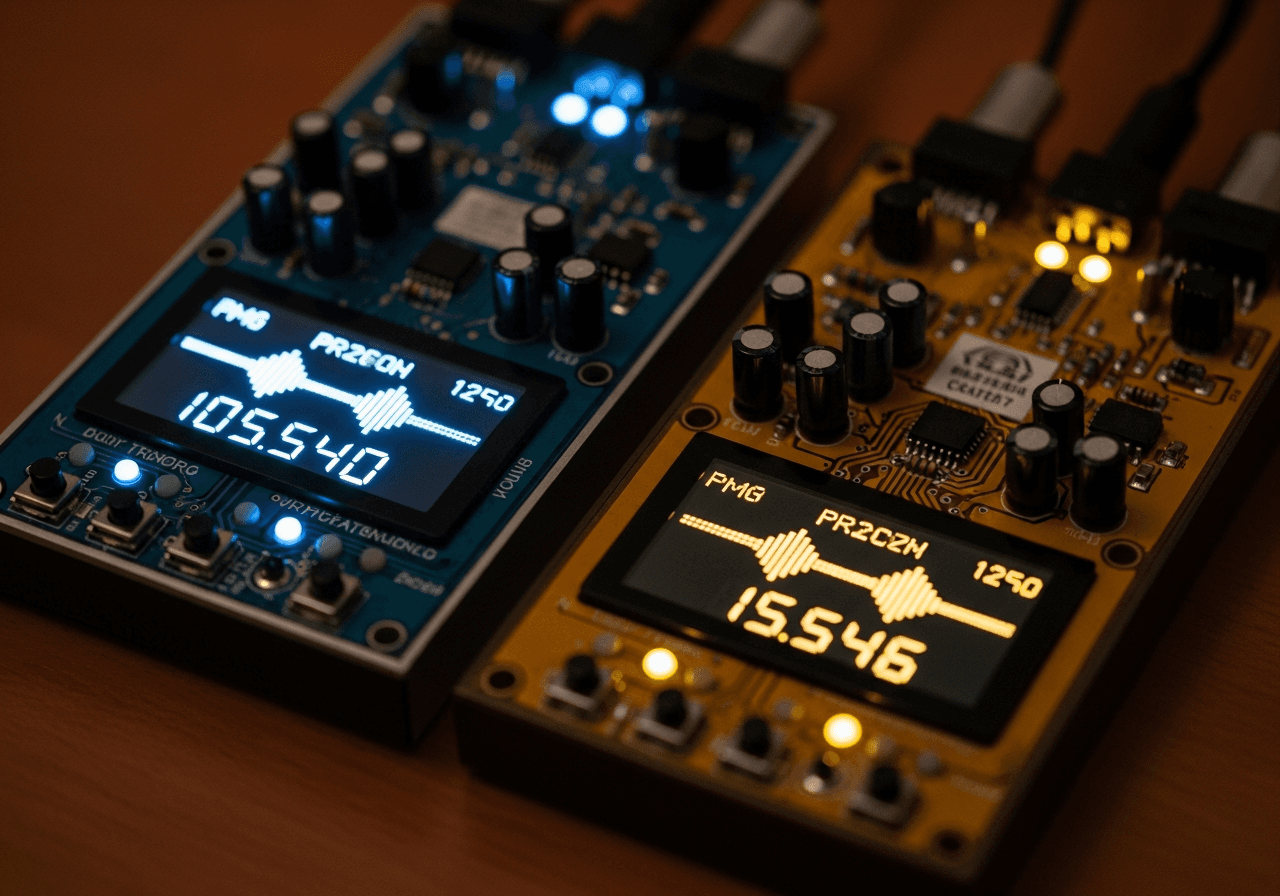
A single unit is complete on its own, but Pocket Operators get more interesting once several are synced together. Pair a PO-14 for bass with a PO-12 for rhythm, and a small band takes shape on a desktop. A row of exposed circuit boards looks almost like an electronics lab — and becomes a kind of interior object in its own right.
Earning the label "real music gear"
Cheap, pop-colored gadgets tend to stay toys. Pocket Operator avoids that fate because the depth of its sequencer and its commitment to sound quality go further than its price and size would suggest. teenage engineering carries the same philosophy into more serious gear like the OP-1 sampler, and Pocket Operator functions as an entry point into that world.
Keep one on the desk, and any melody that comes to mind can take shape immediately. When it's time to step back after a stretch of focused sound design, THE YADOM makes for a good way to take that breath.