Written by: Jin Fujisaki / Published: 2026-02-16
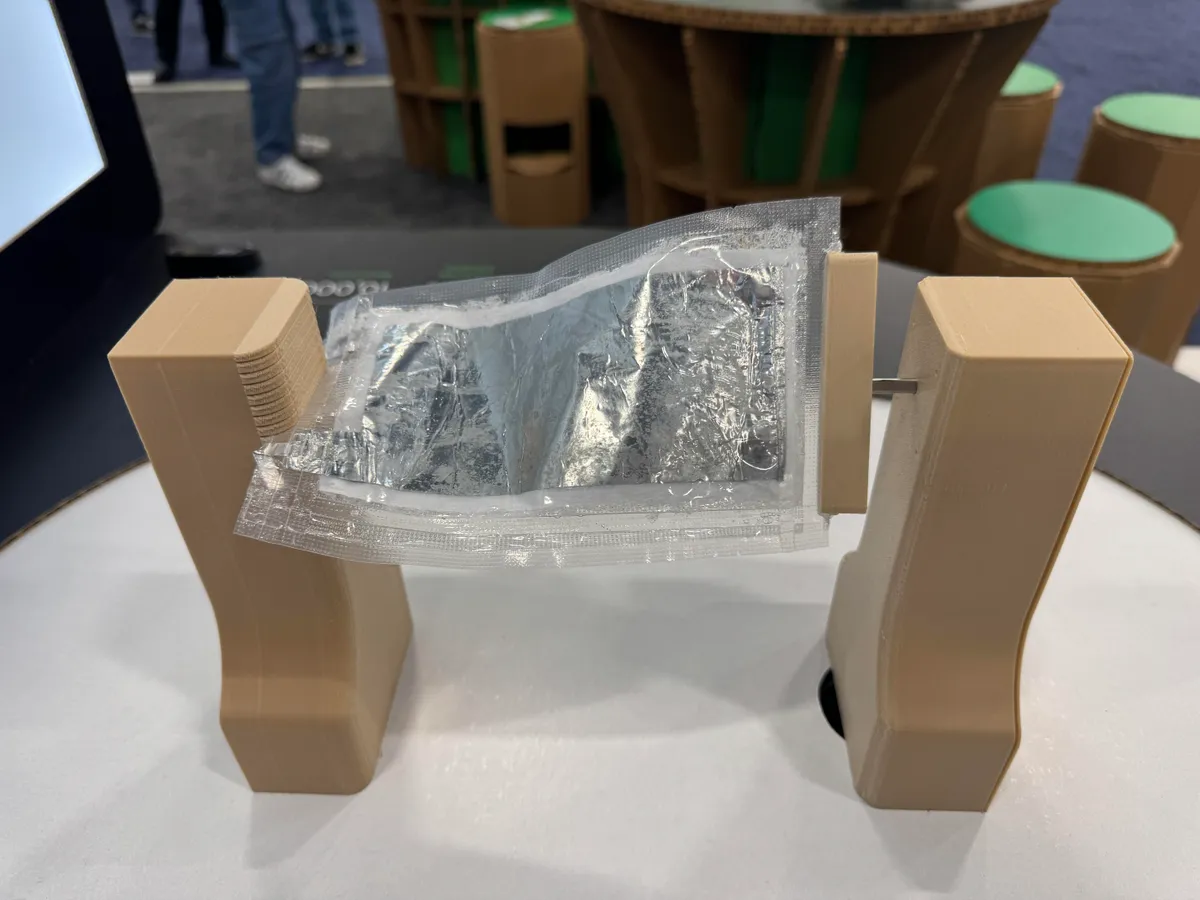
The batteries we know are hard metal cylinders, or the black packs inside our smartphones. They are heavy, unbendable, and above all, "hazardous materials." But the paper battery developed by Singapore-born startup "Flint" fundamentally overturns that definition.
It looks like nothing more than "thick paper." Yet the positive electrode, negative electrode, and electrolyte are all printed within this single sheet. You can cut it with scissors (*safety depends on the product, but structurally it is safe), fold it, or strike it with a hammer without it catching fire. Here is a power source so quiet and safe that it has nothing to do with the "explosion risk" lithium-ion batteries carry.
| Zinc and Manganese. Non-toxic chemistry

image CNET
Why can paper store electricity? The secret lies in its use of "zinc" and "manganese"—abundant in the natural world—rather than rare metals or toxic substances such as lithium or cobalt.
By combining these with hydrogel technology and cellulose (the raw material of paper), pathways for ions to travel are created. Even if a child or pet were to accidentally put one in their mouth, the risk of chemical burns to the esophagus or stomach—as with conventional lithium batteries—is extremely low. It is an invention that raises the safety standard of "carrying energy" by several notches.
| Returns to soil in 3 weeks. A compostable power source
image innova
Flint's greatest innovation lies in "how you throw it away." Once you've finished using it, what do you do with this battery? The answer: "Bury it in your garden."
Because it's made from biodegradable materials, in an environment with appropriate humidity and microorganisms, it breaks down in just a few weeks (about three weeks to a month) and returns to nature. No harmful heavy metals leach out. The mountains of button cells and dry cells that are discarded by the hundreds of millions every year, polluting our landfills—what changes that future is not a high-tech recycling plant, but the power of microorganisms.
| An essential for wearables and smart labels
image Gizmodo
Of course, you can't (at this point) run an electric vehicle on this paper battery. But it's perfectly suited to the "low-power devices" we use in everyday life.
For example, smart tags that report the location of packages in transit. Medical patches stuck to the skin that monitor your health. Or greeting cards that play a sound the moment you open them. Using lithium batteries—which last for centuries—in products designed to be "disposable" is over-spec, and a sin against the environment. "Short-lived batteries for short-lived products." Flint proposes an energy design of the right tool for the right job.
| Summary: A power plant 0.5mm thin. The lifeblood of IoT
image flint
It costs less than existing batteries and can be mass-produced with printing technology. If this "paper battery" becomes widespread, every package and every piece of clothing will gain intelligence.
The carton of milk you bought at the supermarket will tell you, "Your expiration date is coming up." What will power that future IoT society is not a heavy lump of metal, but this thin, white slip of paper. If the very concept of "changing the battery" ever disappears, it will be when technology like Flint's has covered the world.