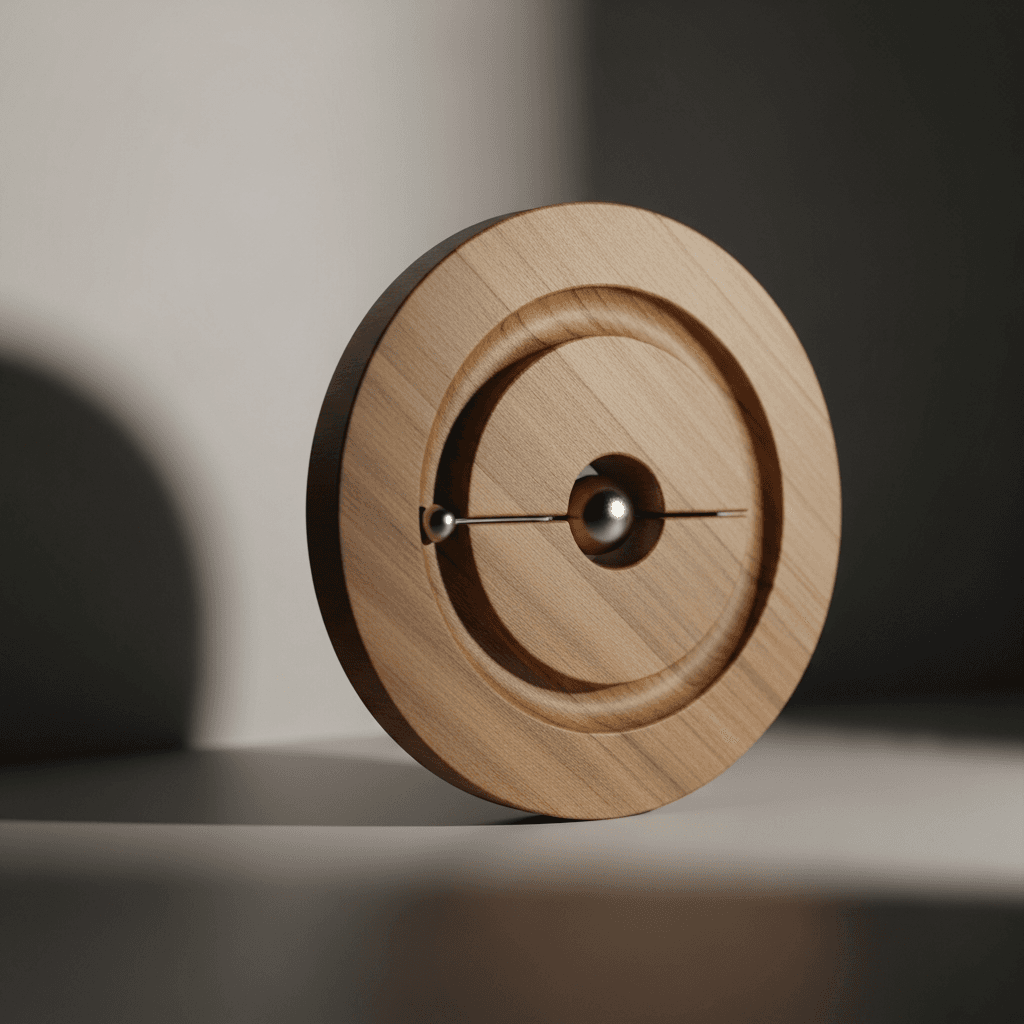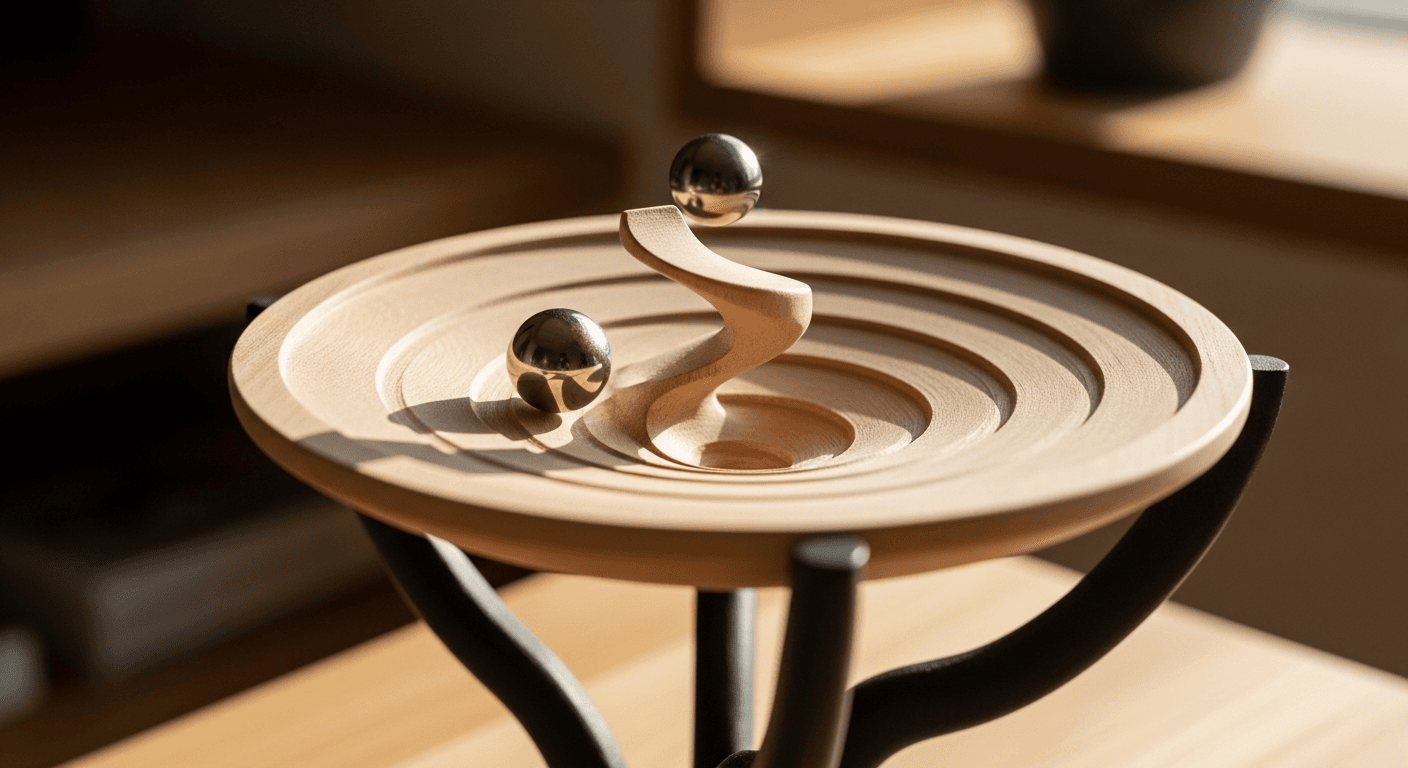
A ball rolls in slow circles down a curved hollow. That's all it does — and yet people find themselves watching for minutes at a time without quite meaning to.
There's no flashy mechanism, no power switch. Just gravity and the shape of a curve. Still, something about watching it seems to slow the viewer's own breathing down to match.
This is the territory of GRAVIMORPH, a Japanese brand devoted entirely to "gravity as craft." The name is a coined blend of gravity and morphology, and the work is single-minded: how does a ball or pendulum move under gravity, and what does that movement look and sound like.
Somewhere between spinning and stillness
The trajectory itself — the ball tracing a curved surface down toward rest — becomes the "subject" of the piece. It's an unusual idea: watching a physical phenomenon rather than a decoration.
GRAVIMORPH's lineup includes SPINDLE, where a ball spirals inward as it descends; WOBBLY, which sways and searches for its point of balance; and DANCE, which keeps tracing circles long after it should have stopped. Each comes in a black-and-silver two-tone finish that lets the material's texture do the talking, all built around the same question: how do you make motion itself beautiful.
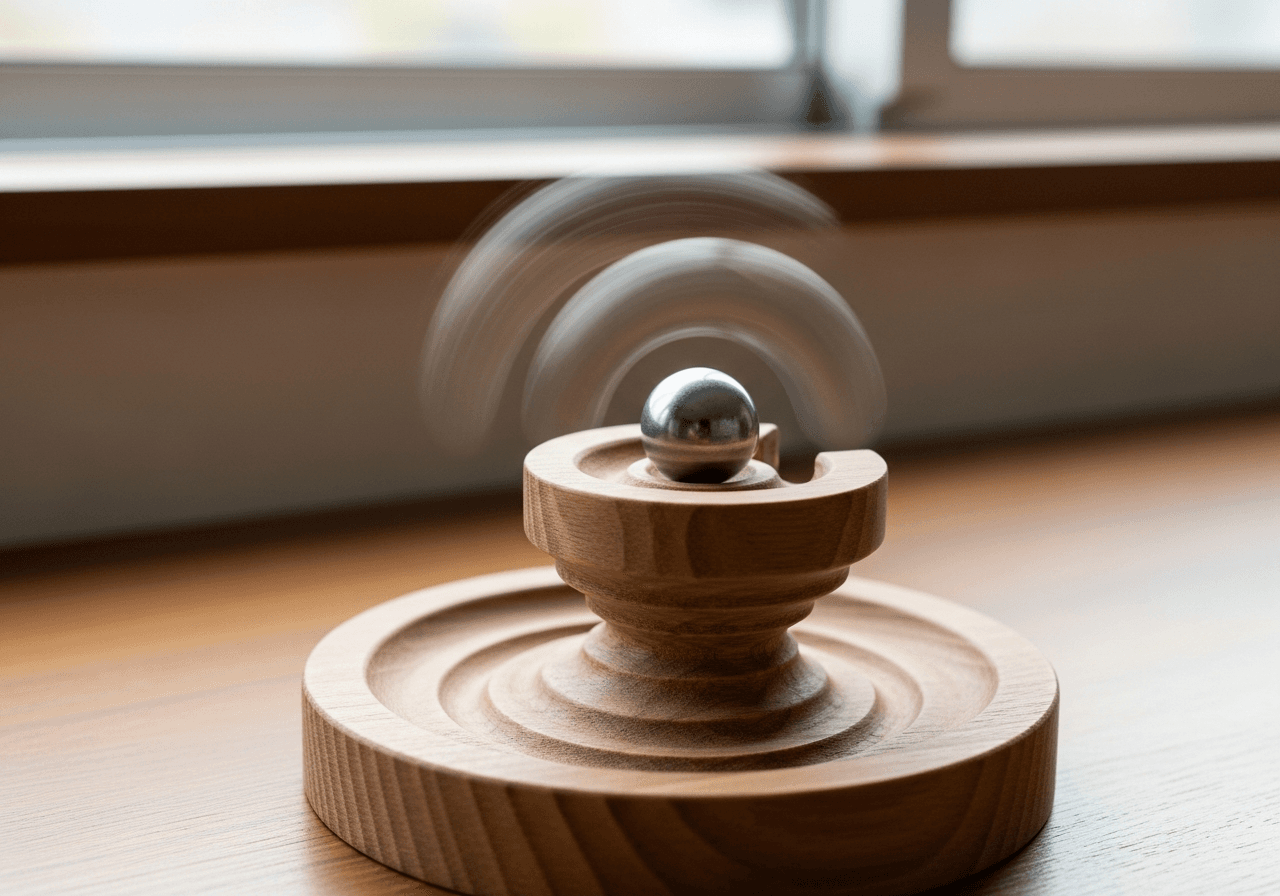
- No power source needed — a flick or a tilt by hand is enough to set it going
- The time it takes to settle, and how the path changes along the way, is engineered through material and curve design
- Multiple series exist across different materials, from wood to metal
Toys in the same lineage — a ball spiraling down into a hollow as it spins, or a yajirobei-style balancing figure that rests purely on the position of its center of gravity — have also been rediscovered lately through social media and design exhibitions. What they share isn't spectacle. It's that they're selling a slice of time spent observing.
Why these objects appeal right now
In a life crowded with notifications, the simple act of watching something has become rare in itself.
The yajirobei balancing toy dates back to Japan's Edo period, and it's no accident that it's being remade now in new materials and forms. As a counterweight to a life ruled by phone notifications, more people seem to find comfort in motion that completes itself without any input at all.
Set one on a desk, and a hand reaches for it between meetings or mid-thought. As a tool for "time spent doing nothing," these gravity-driven craft objects are quietly gaining a following.
Yadom offers a moment's pause through scent and breath; these offer one through the eye, following a ball's path. Different approaches, perhaps, aiming at the same small pause button.