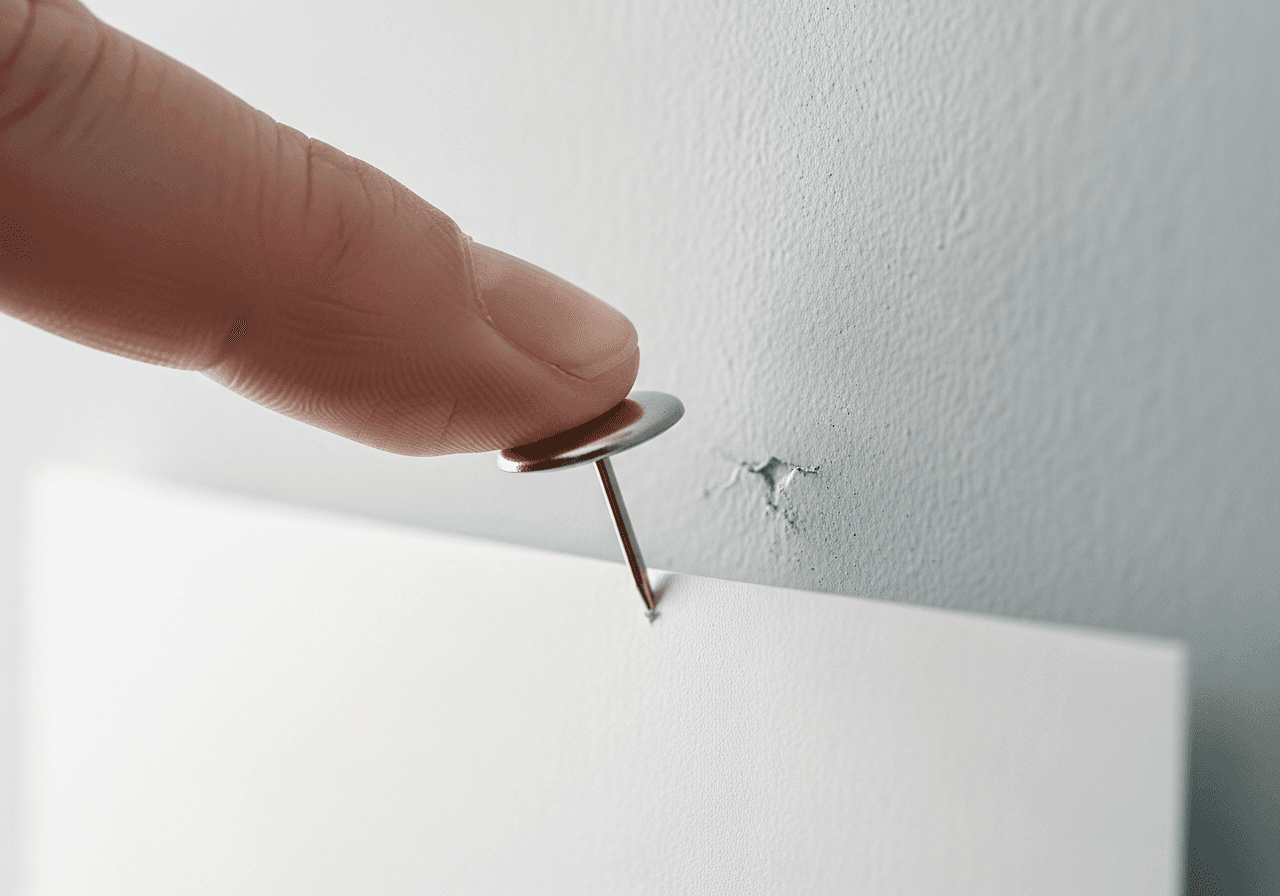
Pull a pushpin out of the wall, and a small hole is always left behind. All you wanted to do was hang something up, yet you end up damaging the wall itself — a contradiction most of us have quietly accepted for years.
In a rental apartment, that one detail carries real weight. Rather than living with a scatter of tiny holes to worry about at move-out inspection, some people simply decide it's easier not to hang anything at all.
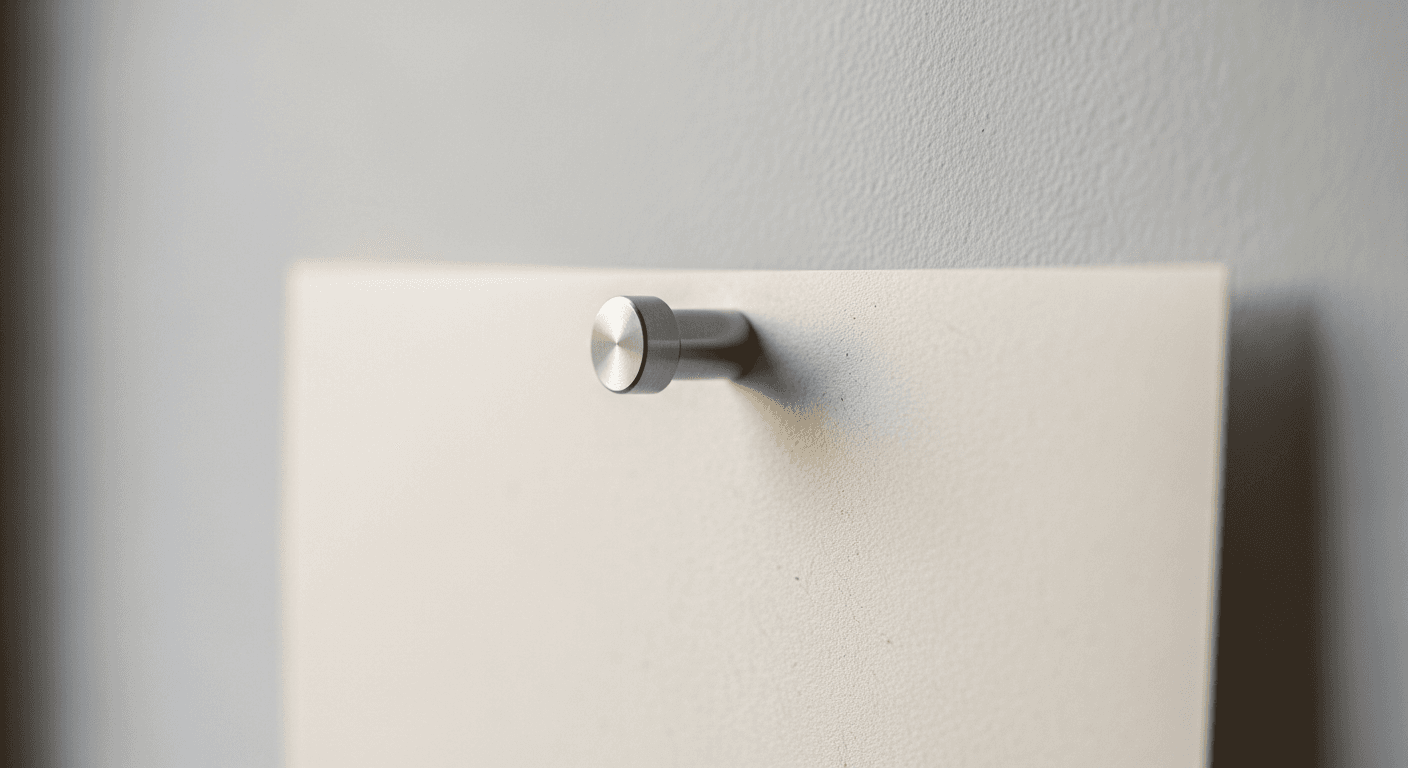
The idea of a "pushpin that leaves no hole" flips that assumption on its head. It's an attempt to keep the role of a pushpin intact while removing the toll it takes on the wall.
Rethinking "Piercing" as "Holding"
If something can hold paper to a wall without piercing it, maybe it doesn't even need to be called a "pushpin" anymore.
A conventional pushpin holds paper in place by driving a needle into the wall. Because holding power depends on how deeply the needle bites in, making it harder to pull out means a deeper, larger hole. That structural trade-off has existed since the pushpin was invented.
Most products designed to leave no hole replace the needle with an adhesive pad or a specially shaped hook that supports the paper instead. Rather than "piercing" the wall, the action becomes "sticking to" or "hanging from" its surface.
How It Differs From the Conventional Type
- Conventional pushpin: a needle pierces the wall to hold things in place, leaving a hole behind when removed
- Hole-free type: adhesion or a hook mechanism does the holding, without penetrating the wall's surface
That difference directly expands where you're free to use it. In rental units or shared office spaces — anywhere you can't afford to damage the wall — this idea becomes especially valuable.
A Space Where Design Details Matter
Achieving the same job without a needle demands real ingenuity in the shape itself.
Needle-free pushpins often hide a lot of thought behind their simple appearance, balancing holding power with ease of use. The size and material of the adhesive surface, how many times it can be reused, how easily it can be repositioned without leaving marks — there's more to consider here than with a plain pushpin.
This idea of "a tool that doesn't damage the wall" is also the kind of theme that tends to be well received in product design circles. There's real value placed in the willingness to solve a small everyday inconvenience through material and shape alone, rather than adding anything flashy.
What to Check Before Choosing One
- How easy it is to reposition
- How many times it can be reused
- Which wall materials it works on (wallpaper, concrete, etc.)
It looks almost identical to an ordinary pushpin, yet the mechanism inside is entirely different. Changing the premise without changing the appearance is a quiet but powerful approach to product design.
The Smaller the Tool, the More Worth Changing It
Improving something as small as a pushpin doesn't stand out, but it steadily removes small daily hesitations.
A hole-free pushpin doesn't add any flashy function — it changes just one thing: whether or not it damages the wall. And yet that single change is enough to reduce the moments of hesitation over whether to hang something up at all.
THE YADOM shares that same instinct: rather than piling on big new features, it focuses on quietly removing the small hesitations and inconveniences of daily life. It's often the small refinements in small tools that end up mattering most, over the long run.