Written by: Jin Fujisaki / Published: 2026-02-04
There's a contradiction many people face after buying a robot vacuum: "In order to let the robot run, I have to move things off the floor and rearrange the furniture."
A typical robot vacuum measures around 35 cm in diameter. That's too big to slip between the legs of dining chairs and too thick to squeeze into gaps between furniture. In the end, humans wind up cleaning the "blind spots" the robot can't reach.
Putting an end to this absurd situation is the "K10+," developed by SwitchBot, a leader in IoT devices. While preserving its features and suction power, the body has been shrunk to the absolute limit — the perfect solution for "cramped Japanese homes."
| Under 25 cm in diameter. The "kei car" of vacuums has arrived

image SwitchBot
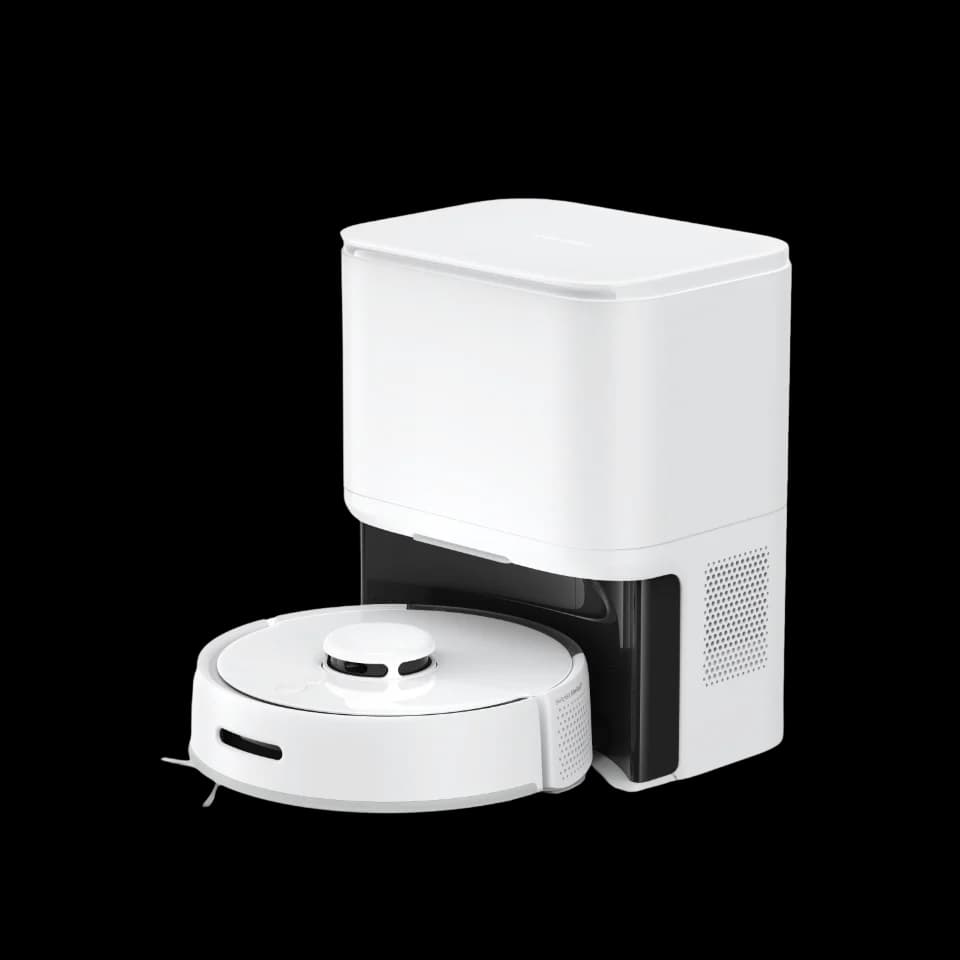
The first thing that strikes you when you open the box is its overwhelming smallness. The diameter is just 24.8 cm. It's more than a size smaller than a typical robot vacuum — about the size of a large dinner plate.
If conventional robot vacuums are "full-size sedans" cruising through spacious American homes, the K10+ is a "kei car" weaving nimbly through the narrow alleys of Japan. Thanks to this size reduction, it slips with astonishing ease into dead spaces that used to be off-limits — between chair legs, the narrow sliver beside the sofa, behind the trash can.
| Master the gaps, master the cleaning
image INTERNET Watch
When you actually run it, you'll be impressed by how nimble it is.
The space between the legs of our dining chairs used to be a cursed zone where conventional robot vacuums would clang and bang and get stuck. The K10+, however, slides through without flinching, sucking up every last crumb under the table before heading home.
The sensors are excellent too — a laser SLAM sensor accurately maps the layout of the room. Small doesn't mean sloppy in its movement; in fact, its tight turning radius makes it especially good at tackling room corners. The operating noise (particularly in "Quiet Mode") is also remarkably quiet, which is a welcome trait in Japanese homes with thin walls.
| It's small, but it comes with a "dust collection base." Maintenance is automated too
image JAL Mail
"If the body is small, isn't the dust bin tiny and constantly full?" The included "Dust Collection Station" answers that concern.
When cleaning is done and it returns to its base, the base powerfully sucks up the dirt collected inside the unit with a loud "shoooo!" The paper bag inside the base can hold about 70 days' worth of debris, so all a human has to do is toss the bag every two or three months.
It even has a function that lets you attach a commercial "cleaning sheet" to the underside for damp mopping. All-inclusive features in a tiny body. The spec sheet is almost cheating.
| From singles' apartments to a parents' home full of stuff
image Monopedia
The K10+ delivers its strongest performance in environments like these:
- Studios, 1LDKs, and other apartments where floor space is limited and you live alone
- Homes packed with furniture and possessions, like a parents' house, where little floor is exposed
- Households with kids who want extra-thorough cleaning under the dining table
- People who used to dismiss robot vacuums as "too big and in the way"
The price, in the 50,000-yen range (and sometimes cheaper during sales), is also far more accessible than high-end models.
| Wrap-up: Bigger isn't always better. When it comes to vacuums, "small" is righteous.

image FURUTIMES
The SwitchBot K10+ isn't just a shrunken-down version of something else. It's the optimal answer to an obvious truth — "Japanese homes need a Japanese size" — addressed with engineering.
Free yourself from the stress of watching a big robot ram its way through your furniture, and welcome a small partner that cleans even the narrowest gaps to perfection. This may be exactly the version of the smart home we've all really been looking for.