Written by: Jin Fujisaki / Published: 2026-02-17
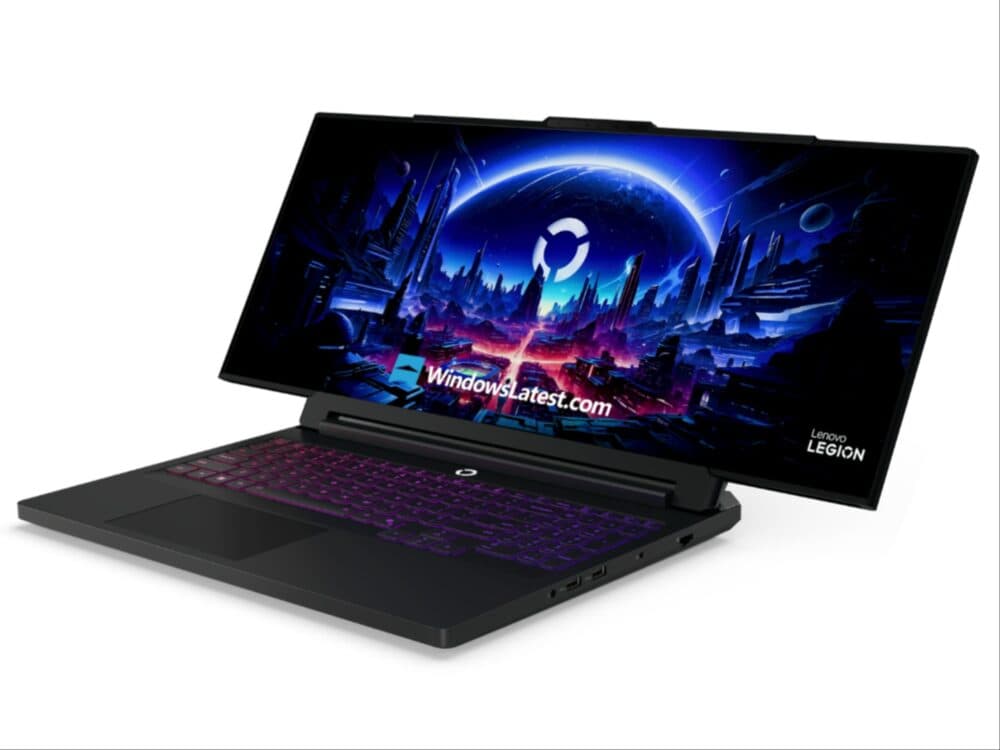
Up until 2025, we were folding our smartphones and PCs in half like clamshells. But Lenovo in 2026 is different. Slide the switch on the side of the "Legion Pro Rollable," and with the quiet hum of a motor, the display rises up from inside the chassis.
Normally, it's a compact 13-inch laptop. But once it enters battle mode, the screen extends vertically (or horizontally) and instantly transforms into a 17-inch class large display. There's none of that telltale "crease in the middle" that plagues foldables. It's perfectly flat, end to end, with the beautiful colors of OLED spreading seamlessly across the surface. The sight is like watching magic—more than enough to make any gadget geek's brain explode with excitement.
| Mobile Ultrawide. A "Physical Cheat" for FOV in FPS Games

image Daily Gadget
The biggest beneficiaries of this gimmick are gamers. Expand the screen to its maximum, and the aspect ratio transforms, enabling "ultrawide display" or "vertical display" modes that are impossible on a typical laptop.
In FPS games, your horizontal field of view (FOV) physically widens, letting you spot enemies faster. Or, you can display the game itself on the lower portion of the screen and use the expanded upper area for Discord or strategy guides—multitasking that's normally impossible without an external monitor, all wrapped up in one device. Instead of "carrying around a dual-monitor setup," "the monitor itself gets bigger." This shift in thinking turns a hotel room on a business trip into the ultimate gaming booth.
| Lenovo's Mad Engineering. An Obsessive Devotion to Durability
image BigGo
"If there are moving parts, won't it just break right away?" It's a fair question, but this is where Lenovo's near-obsessive engineering—honed through years of ThinkPad development—truly shines. The roll-up mechanism uses a special flexible material that withstands tens of thousands of extension/retraction tests, along with a brush structure that keeps dust from getting inside.
What's more, as the screen extends, the air intake at the bottom of the chassis also expands. Bigger screen = more power consumption = more heat. To solve this equation, Lenovo cleverly uses the deformation itself to boost cooling efficiency (airflow)—the kind of design that's the very pinnacle of functional beauty. It's a perfectly logical gimmick: stretch it out to cool it down.
| The Price Includes a "Romance Tax." And It Still Sells.

image ExpectReviews
This machine likely retails for somewhere in the 400,000–500,000 yen range. That's the price of a high-end desktop PC. And yet, pre-orders flooded in the moment it was announced.
Why? Because this isn't just a PC. At a café or an eSports venue, you flip a switch and the screen stretches. The stares from those around you in that moment. The gasps. The sense of omnipotence that comes from "using the future." Users find value in the entire experience that includes all of it. While other manufacturers are stuck in a spec war, Lenovo has launched a revolution in form factor.
| Conclusion: The Final Evolution of the Laptop. There's No Going Back.

image ExpectReviews
Once you've experienced this "stretching screen" even just once, PCs with fixed screen sizes start to feel cramped. Expand the display when you need it, only as much as you need. It's the fusion of ancient wisdom—from the era when people used scrolls—and cutting-edge OLED technology.
If you want to "stand out" AND "play games on a big screen," there's no need to hesitate. The Legion Pro Rollable is the world's smallest movie theater and the ultimate battlefield, all tucked inside your backpack. Now, flip that switch. You'll hear the sound of your world expanding.