Written by: Jin Fujisaki / Published: 2026-02-12
If all you need is to light up the dark, your smartphone's LED is more than enough. In this day and age, there may be no real reason to carry around a big, heavy flashlight. And yet, MAGLITE — founded in 1979 — keeps selling. There's a reason for that, and it has to do with more than just throwing light.
Once upon a time, American police officers wore Maglites (especially the models that took three or more D-cell batteries) on their hips. They used them to light up dark alleys, sure — but also as an improvised "weapon" (a baton) when things got rough. The body is machined from the same aluminum alloy used in aircraft, tough enough not to crumple even if a car runs over it. It doesn't just illuminate — it protects. That overwhelming sense of reliability is what Maglite is really about.
| Heavy as a Blunt Instrument: The Golden Ratio of the "3D" (3 × D-cell)

image Amazon
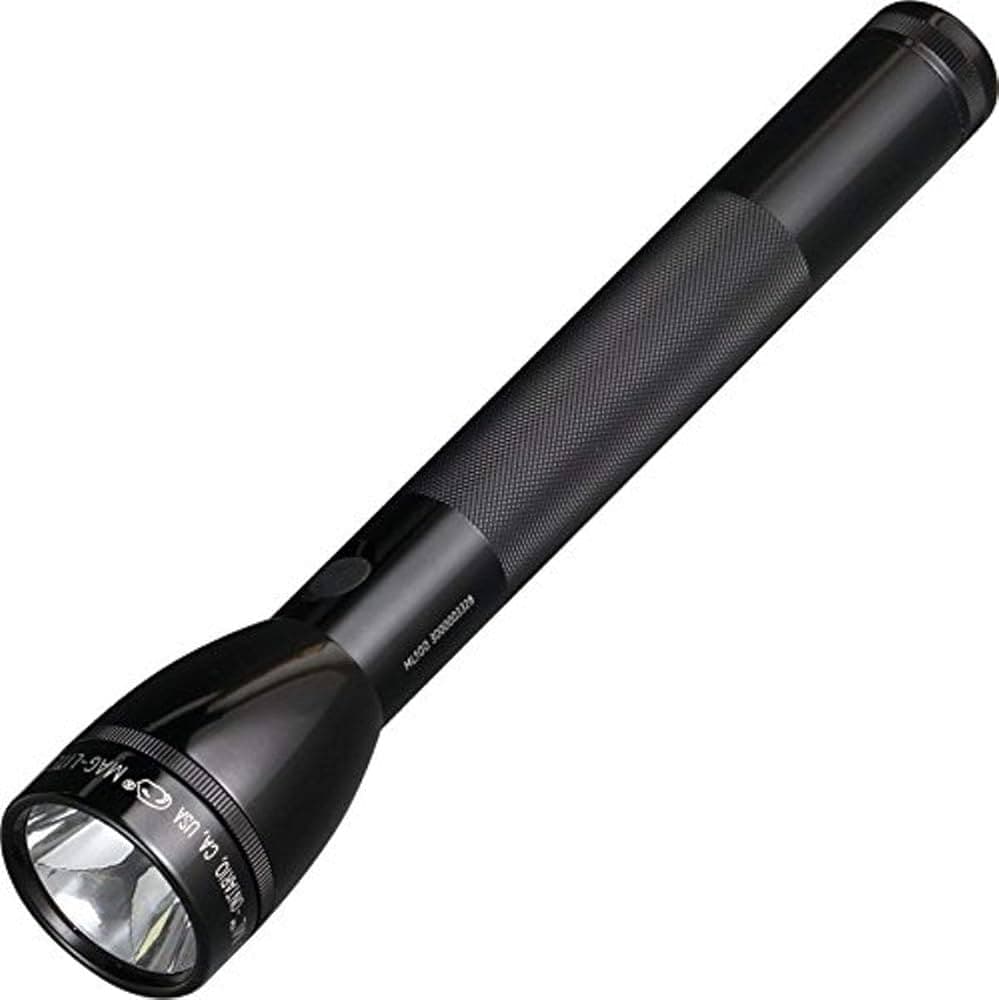
Maglite comes in various sizes, but the most iconic is the "3D-CELL" (3 × D-cell battery) model. It measures about 30 cm long and weighs over 800 grams with batteries loaded. Pick it up and it feels like a solid, weighty slab of metal in your hand.
The 2-cell version (2D) is too short to feel substantial. The 4- to 6-cell versions are too long and too heavy. Sitting right in the middle, the "3D" strikes the ideal balance for swinging (and, of course, for lighting your way too). The surface is finished with knurling — a textured, anti-slip pattern — so it grips firmly even with gloves on or in the rain. That rugged feel is something a plastic flashlight could never replicate.
| A Machined Seal That Keeps Working Even Underwater

image ILIKEBUYIJK
The body of a Maglite uses rubber O-rings (gaskets) at every joint, giving it excellent splash resistance and impact durability. Drop it in a muddy puddle, slam it onto concrete — it just keeps shining without complaint.
The switch is built around a special design too, with a "self-cleaning mechanism" that wipes the internal contacts every time you click it. It's there to prevent the dreaded scenario where you reach for your light after months of disuse and the contacts have gone bad. Even if it gets caked in mud during a disaster, you can rinse it off and keep using it. This isn't a delicate piece of electronics — it's a tool.
| Just Twist the Head: "Focus Adjustment" and "Candle Mode"
Operation couldn't be simpler. Just twist the head to adjust the beam steplessly from "spot" (a tight, focused beam) to "wide" (a broad floodlight). There are no complicated mode-switch buttons. Just intuitive, analog control.
What's surprisingly little-known is the "candle mode." Remove the head, flip it upside down, and place it on the table. Insert the rear (the tailcap) of the body into it, and you've got an instant lantern (essentially a candle). On a blacked-out night, gathering around the dinner table in this mode creates a warm, campsite-like atmosphere.
| Even with LEDs, the Value of "Weight" Hasn't Changed
image WAIPER
Today's Maglites have moved on from traditional bulbs to the latest LEDs, with brightness leaping forward. But the shape of that hefty aluminum body hasn't changed in decades.
They could make it lighter if they wanted to. Maglite chose not to. Because what users want isn't "lightness" — it's "toughness." Keep one by your bedside and it's protection against a midnight earthquake or an intruder. That psychological reassurance scales directly with the weight.
| Summary: The Ultimate Disaster-Prep Item You Can Buy for 5,000 Yen
image Yahoo!
Pricing for the LED 3D model runs roughly 7,000 to 10,000 yen. That's several times more than the cheap flashlights at a home center, but considering it'll last a lifetime, it's a bargain.
"What do you do when your phone runs out of battery?" The answer is right here. As long as you have batteries, it will light up reliably ten years from now. And just gripping it summons a quiet sense of courage. The Maglite is the "glowing iron rod" that guards your home.