Written by: Jin Fujisaki / Published: 2026-02-12
Fully automatic coffee makers that brew at the touch of a button, and capsule machines, are undeniably convenient. In Italian households, however, they may well be considered "heresy." The Moka Express, invented in 1933 by Alfonso Bialetti, is a national icon said to be found in over 90% of Italian homes.
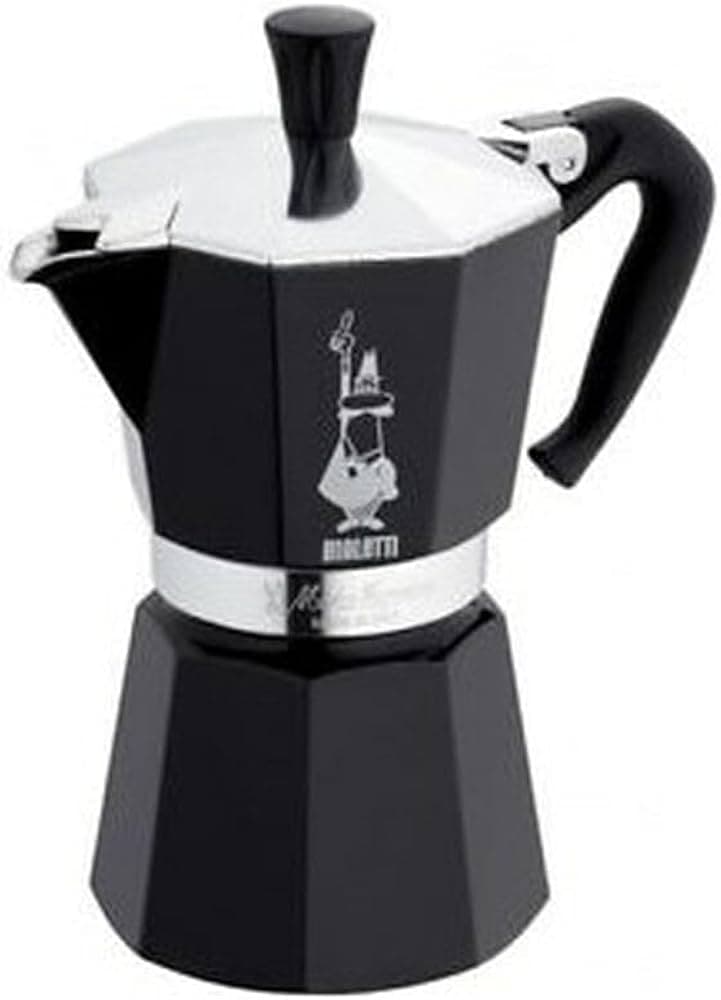
Its distinctive octagonal aluminum body is paired with a black resin handle. And on the body itself is the comical, mustachioed gentleman (a caricature of the founder). This is no mere piece of cookware—it is the instrument that handles the "sacred flame" symbolizing the Italian morning.
| Detergent Is the Enemy. The Blackened Interior Is a "Badge of Honor"

image Amazon
There is one iron rule you must absolutely uphold with this tool. That rule is: "Never wash it with detergent." Care for it with water alone.
The reason is that the more you use it, the more the oils from the coffee form a coating on the aluminum surface, eliminating any metallic odor and locking in your home's own unique "flavor." Compared to a brand-new, gleaming pot, one that has been used until its interior is stained brown and blackened with coffee will brew a far smoother, more aromatic cup. It isn't "dirty"—it's "seasoned." Just as you might enjoy the fading of a pair of jeans, you learn to enjoy the patina of the pot.
| The "Glug-Glug" Sound. An Analog Brewing Ritual

image Bialetti
The method is simple, but it does take a bit of practice. Pour water into the lower boiler, pack finely ground coffee into the filter, screw on the upper chamber, and place it on the stove. After a few minutes, hot water pushed up by steam pressure passes through the grounds and erupts into the upper chamber.
At that moment, a distinctive "glug-glug, hissss" sound fills the kitchen. This is the signal that brewing is complete. It's a physical phenomenon that uses no electricity—just fire, water, and beans. Standing in front of the stove, listening to this sound and inhaling the rising aroma, becomes a morning meditation that nothing else can replace.
| It's Not Espresso. It's the Rich Experience Called "Moka"

image SATORY
Strictly speaking, coffee brewed in a Moka Express is something different from the "espresso (9 bar)" you'd get at a café. Because the pressure is lower (around 2 bar), no crema (foam) forms. Even so, it is far richer than drip coffee, with a punchy bitterness and depth.
In Italy, this is called "moka." You can drink it as is with plenty of sugar, or cut it with steamed milk to make a caffè latte or cappuccino. It pairs especially well with milk—you can easily make a cup at home that rivals the rich lattes served in cafés.
| The Structure Is Simple. That's Why It Lasts "for Generations"

image Baytown
Most electrical appliances last 10 years at best, but because the Moka Express has such a simple structure, it can be used almost indefinitely. The only consumable part is the rubber gasket. As long as you replace the gasket every few years, the body itself is virtually unbreakable.
In fact, it's not unusual in Italy for grandchildren to inherit the Moka Express that their grandparents once used. The coffee aroma absorbed over decades is the family's history itself. A block of aluminum becomes a "family heirloom" passed down across generations.
| Summary: A "Coffee Life You Cultivate," Starting at 5,000 Yen

image RAVE coffee
The price for a 3-cup model (about the equivalent of one mug for a Japanese drinker) runs from 5,000 to 6,000 yen. That's far cheaper than buying a machine. Take it camping, and you can enjoy the perfect cup brewed over a morning campfire.
At first, it may give off a metallic smell. But don't give up—keep using it every day. After a month, six months, a year. Your Moka Express will have grown into the partner that brews you the best cup of coffee in the world.