Written by: Jin Fujisaki / Published: 2026-07-23
You can tell the sound apart. But the moment you sit in front of the paddle, your fingers stop. This is the wall that many self-taught Morse code learners run into.
What if there were a trainer that made you send back every code it played, and wouldn't let you move on until you got it right? Your fingers would learn the patterns far faster.
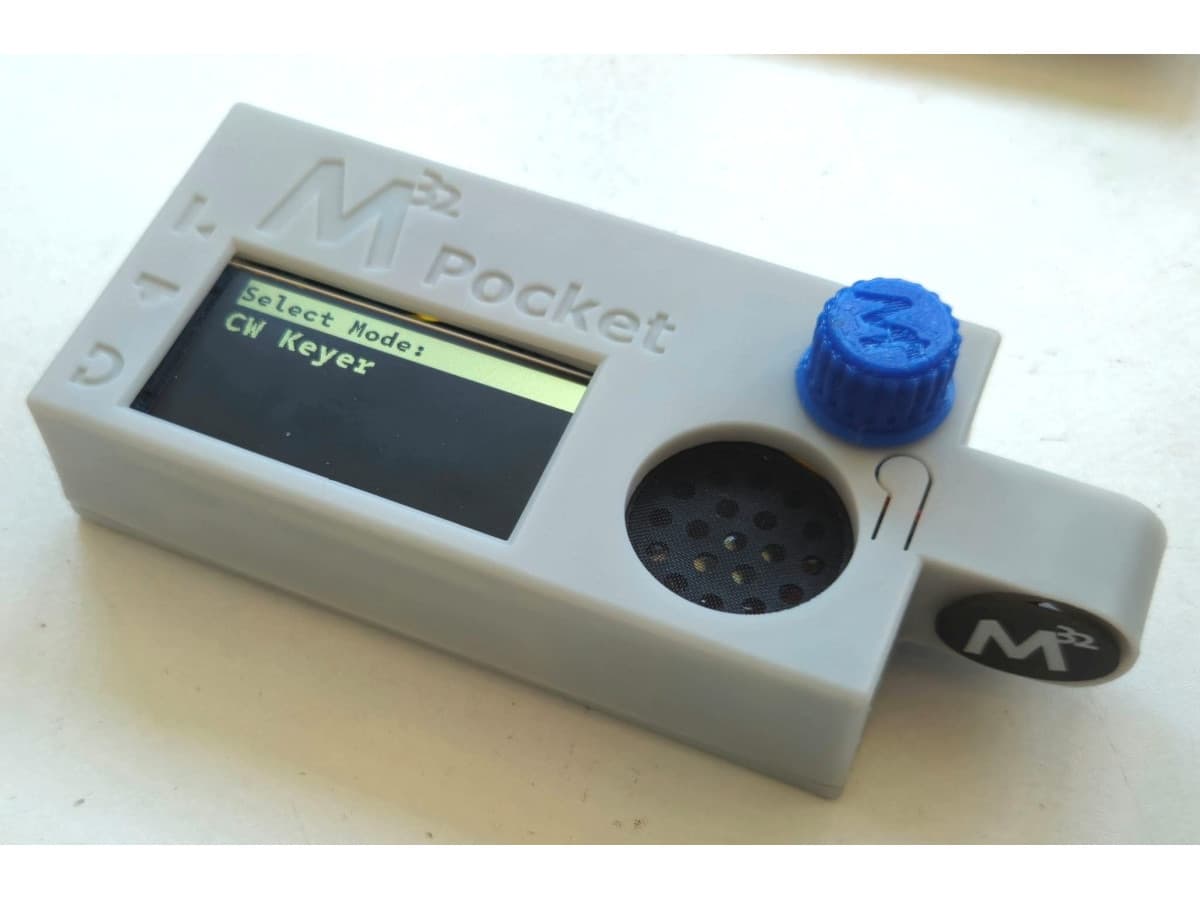
The "Morserino-32," designed by Austrian amateur radio operator Willi Kraml (callsign OE1WKL) and manufactured and sold by QRP Labs. The current, palm-sized model, the "M32 Pocket," is no ordinary key. It's a dedicated training device — like a personal tutor — that drills code into your fingertips through the Koch method and an echo trainer.
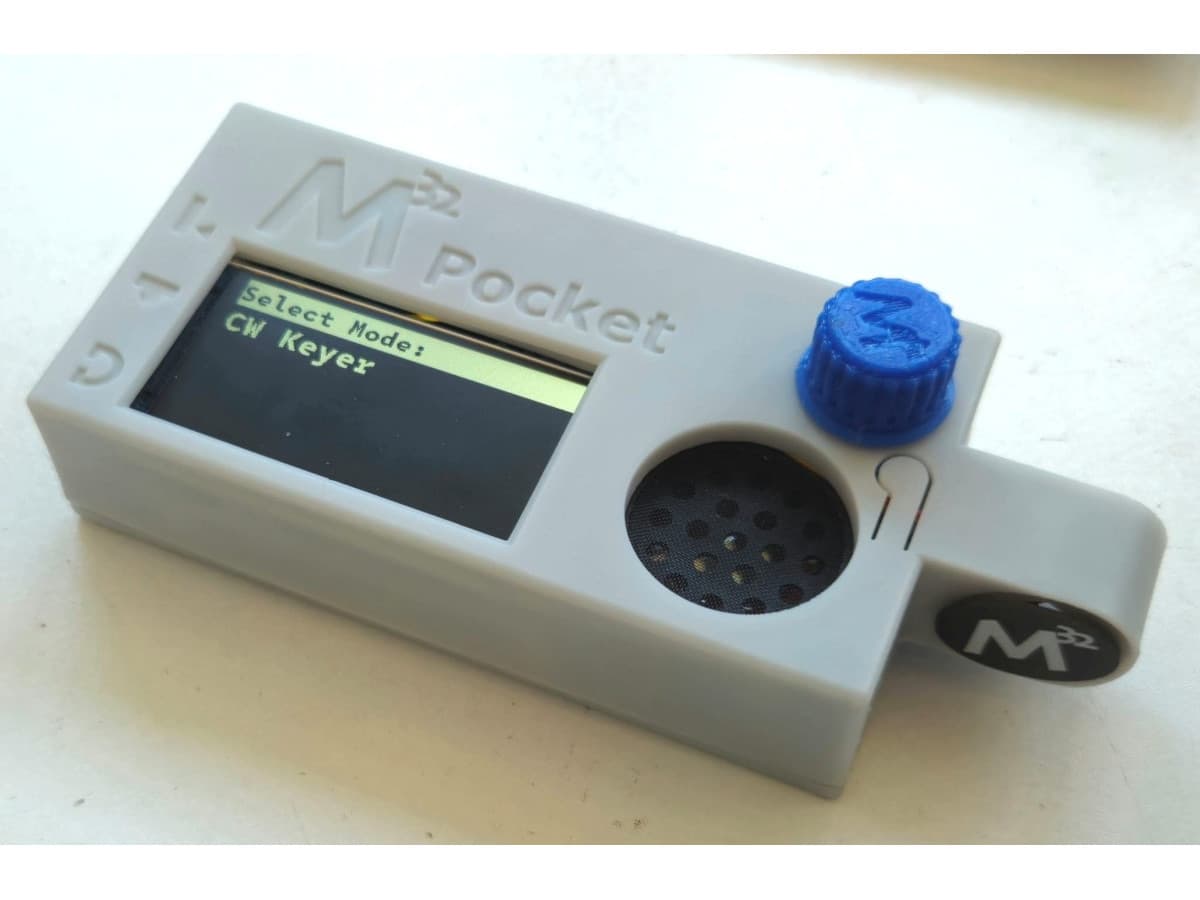 image QRP Labs (shop.qrp-labs.com)
| The Secret Is the "Koch Method" and the "Echo Trainer." The Characters Sound at Full Speed from Day One
The Morserino-32's learning mode runs in the opposite order from typical memorization methods. The characters themselves are played at real operating speed right from the start, and only the number of characters you're expected to learn is gradually increased. This approach is called the "Koch method" — rather than slowing things down to let you get used to the rhythm of the code, it drills your ear with the actual tempo from the very first lesson.
The other core feature is the "echo trainer." The M32 Pocket has you send back, on the paddle, whatever code it just played. Get it right, and you move on to the next challenge. Get it wrong, and the same challenge repeats. It won't let you move forward until you get it right.
| Play It, Make You Send It Back. Inescapable Repetition Builds Paddle Technique into Your Body
You can practice receiving on a smartphone, but tapping a screen alone won't build paddle technique. The true nature of the wall — "I can hear it, but my fingers won't move" — lies precisely in this lack of physical practice.
The M32 Pocket's echo trainer lets you repeat the exact motion essential to real-world contacts: receive, then switch to sending. Its built-in "CW generator" serves up a continuous stream of random character strings, callsigns, and common abbreviations and words. You never know what's coming next. Because of that, instead of memorizing a fixed sequence, you build the ability to actually distinguish the sounds themselves.
It also has a decoder function. Beyond the built-in touch paddle and straight key, you can feed a receiver's audio output into the unit's audio input jack and use it as a CW decoder as well. You can even use raw code sent by actual radio operators — like the received audio from a WebSDR — as practice material.
| From a Desktop Trainer to Something in Your Pocket: The Evolution Called "M32 Pocket"
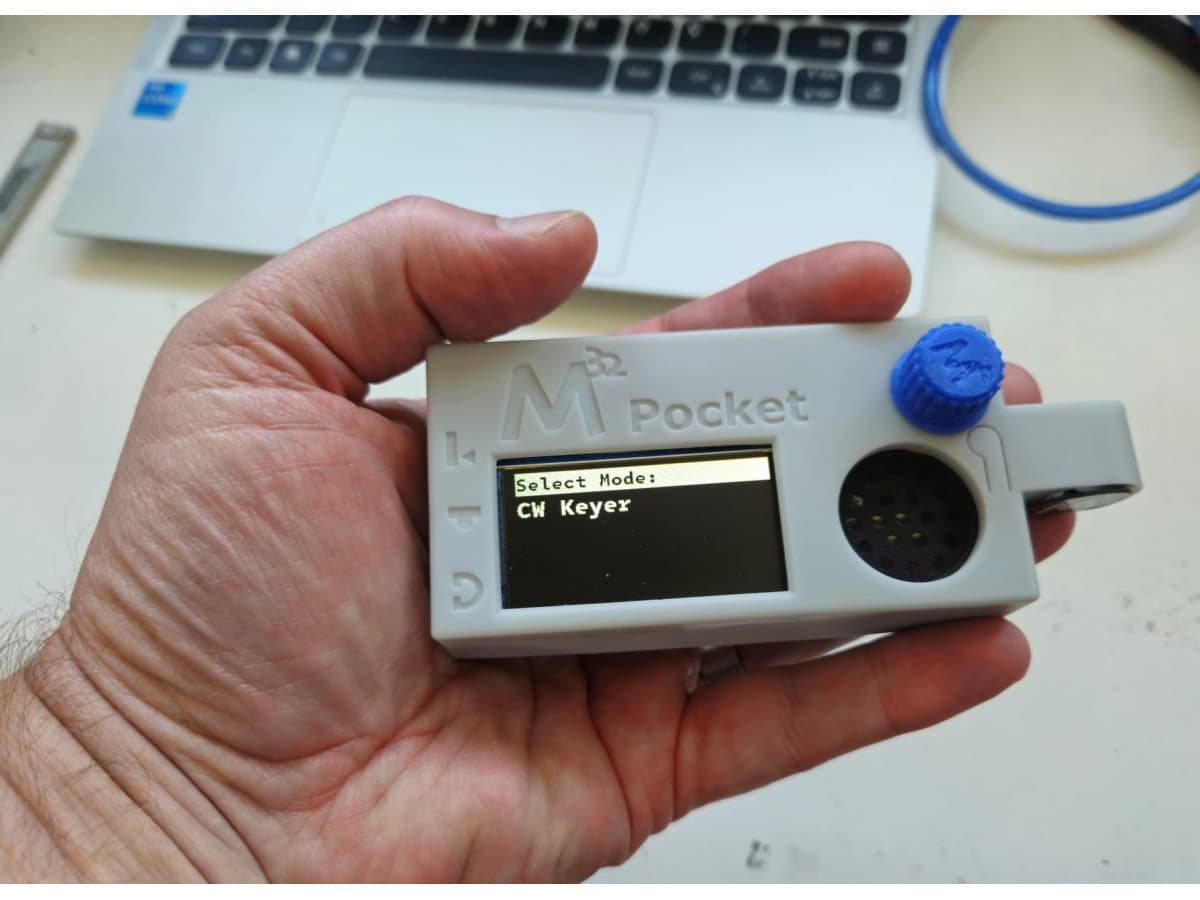 image QRP Labs (shop.qrp-labs.com)
The Morserino-32 has a history. The original solder-it-yourself kit, an improved version 2 kit, and now the current "M32 Pocket," which arrives fully assembled. Each generation builds on a shared firmware foundation, so there's no break in functionality across models.
What the M32 Pocket embodies is the value of "taking a desktop trainer and carrying it in your pocket." It's light, weighing about 100g, and compact enough to fit entirely in one hand. Inside a 3D-printed, silver-gray PETG resin case, it houses a built-in touch paddle, and you can check the current mode on its easy-to-read 1.9-inch color TFT display.
For connectivity, it uses "ESP-NOW," a direct 2.4GHz-band communication method that doesn't require an access point, letting you pair with other M32 Pocket units at close range. Switch it into Wi-Fi transceiver mode, and you can also communicate via internet-based iCW or connect to VBand. Its open-source software is released into the public domain, and you can even try out custom firmware on GitHub.
| Price and How to Buy It
The current, fully assembled "M32 Pocket" costs $80 from developer QRP Labs' official online shop. At the exchange rate at the time of writing, that comes to roughly 13,000 yen (shipping and customs not included, and subject to exchange-rate fluctuation), with the battery sold separately. It requires a rechargeable 14500-size lithium-ion battery to operate, and the official recommendation is to use a cell with built-in protection circuitry. If you don't already have a USB Type-C cable on hand, you can add one as an option at checkout.
It's been a long time since Japan's amateur radio licensing exams dropped the practical Morse code (telecommunications technique) test. The Class 3 license dropped it in 2005, and Classes 1 and 2 followed in 2011. There's no longer any need to learn code for the sake of a license, but plenty of radio operators still keep practicing simply because they're drawn to the appeal of CW itself.
| Who Is It For? For People Who "Can Hear It But Can't Send It"
The M32 Pocket can support the practice of people like these:
- People who want to learn CW itself, not for the sake of a license
- People who can hear the code but whose paddle technique can't keep up
- People who want to use the sound from a receiver or a WebSDR as material to practice picking out real-world code
- People who love open-source gear and want to tinker with their practice setup themselves
| Conclusion: The Next Time the Code Sounds, Your Fingers Move Before You Think
What the Morserino-32 trains isn't rote memorization of the code. It's the very circuit that makes your fingers react instantly to a sound the moment it plays.
Morse code your ears already understood comes to a halt in front of the paddle. This palm-sized machine gradually closes that momentary gap. The next time the code sounds, your fingers will move before you think. Why not grow that reflex, right in the palm of your hand?