Written by: Jin Fujisaki / Published: 2026-01-23
In modern desk work, "how to sit in a comfortable chair" has been an eternal theme. Ergonomic mesh backrests, freely adjustable armrests, headrests.
But an overly comfortable cockpit can sometimes turn a person into an "immobile lump." Pacing around to let your thoughts wander, or springing up to face the whiteboard. What if a heavy, imposing chair is robbing you of that "bodily movement"?
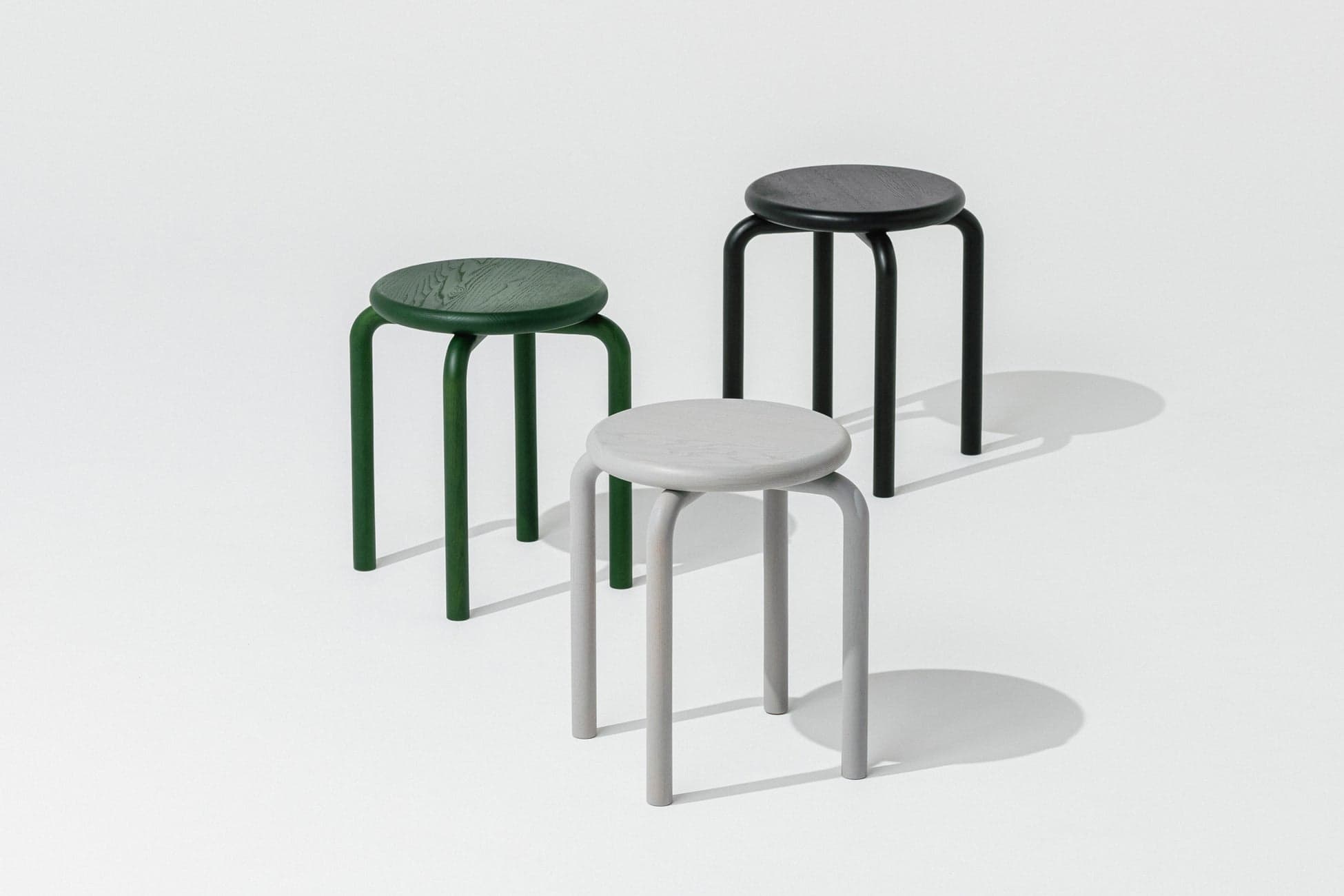
TENT's "OSTOOL" is a product born from precisely that question. Rather than a chair, it might be better described as an "input device" for keeping the body in an active state.
| A "Round Mass" Made With Karimoku Furniture

image TENT
OSTOOL was born from a collaboration between TENT and Karimoku Furniture, one of Japan's leading wooden furniture manufacturers.
At first glance, it looks like an ordinary wooden stool you might find anywhere. But the details are crafted with an almost obsessive level of precision.
Its defining feature is the absence of corners. The edges of the seat, the lines of the legs, the joints. Everything has been thoroughly rounded. Beyond merely "not being painful," the surfaces form organic curves that make you want to run your hand over them. Bringing this to life required Karimoku's advanced cutting and shaping techniques, applied without restraint.
| Why This Shape?
image TENT
Why such a relentless commitment to "roundness"? There are rational reasons behind it that gadget lovers can readily appreciate.
- Following the body: No matter what angle you sit at, the back of your thighs is never compressed.
- A durability hack: With no corners, dents and scratches from bumps don't stand out (they blend in as part of the aging process).
- An interface for attachment: A pet-like presence that almost makes you want to call it your "little stool buddy."
What deserves special attention is the underside. Flip the stool over, and you'll be struck by the beauty of the joints connecting the seat to the legs. Investing cost in the parts you can't see — that philosophy evokes the same aesthetic found in Apple's internal product design.
| The Boundary Between "Sitting" and "Standing" Disappears
image TENT
When you actually work on the OSTOOL, a curious sensation washes over you. With no backrest, your spine naturally straightens, and you find yourself sitting with your core engaged.
You might think this would be tiring. But the reality is the opposite. Because your body isn't locked in place, you can constantly make tiny adjustments — shifting your weight slightly, perching on the edge — always moving in subtle ways.
And above all, standing up is overwhelmingly fast. The moment you think "Oh, let me grab that document," 0.5 seconds later you're already on the move. Sitting, yet always ready to take off. It's like riding in a sports car kept idling, ready to launch.
| Who Is It For?
image TENT
This product isn't suited for someone who wants to relax and watch a movie. But for the following kinds of people, it could be the strongest possible partner.
- Creators and knowledge workers: Those who'd rather develop ideas while moving than sitting still.
- Minimalists: Those who don't want a giant black office chair dominating their room.
- People who appreciate "aging gracefully": Those who enjoy not just digital gadgets, but the way wood and leather mature over time.
| Conclusion | Not Furniture, But a Body-Extension Tool
image TENT
So, what do you think?
The OSTOOL isn't an interior piece meant to decorate your room. It's a "maintenance tool" for keeping the OS that is your body running on a nimble, up-to-date version.
Round, gentle, yet with a firm core. Sit down on a partner like that, and somehow today's work feels just a little lighter on its feet.