Written by: Jin Fujisaki / Published: 2026-02-08
Even when you use a store-bought pasta sauce, or make a tomato sauce exactly to recipe, something feels off. The noodles slip around without clinging to the sauce, and partway through your meal they go soft and mushy. Have you given up, thinking, "I guess you really do need a pro's skills"?
The cause isn't your cooking ability. It comes down to how you choose your "noodles (pasta)." The slick yellow pasta on sale at the supermarket and the pasta used by Italian chefs are entirely different foods. With "RUMMO," a long-established Italian brand founded in 1846, you'll understand the difference the moment you boil it.
| A Rough Surface. This Is the Secret to "Gripping the Sauce"

image Rakuten
Take RUMMO pasta out of the bag and look closely. Unlike typical pasta, it doesn't gleam and shine — instead, it looks whitish, almost dusted with flour, and feels "rough."
This is proof that it's shaped using a traditional copper mold called a "bronze die." The microscopic ridges on this rough surface attract sauce like a magnet. Meat sauce or carbonara sauce that would otherwise pool at the bottom of the plate with smooth pasta clings firmly to every strand of RUMMO and gets carried all the way to your mouth. The sensation that "the pasta and sauce become one" is something only this noodle can deliver.
| "Slow Crafted" — Stays Al Dente, Forever
image Amazon
"Lenta Lavorazione," part of the brand name, is Italian for "slow processing." While mass-produced pasta is dried at high temperatures for a short time, RUMMO is dried slowly at low temperatures over a long period.
This keeps the wheat's naturally fragrant aroma from escaping. More importantly, the noodle becomes denser, giving it astonishing "bite." Even if there's a delay between draining and eating, or if you take your time with a glass of wine, the noodles resist going soggy. You can enjoy that springy, firm texture all the way to the last bite.
| Why Beginners, Especially, Should Use Good Pasta
image Saison Factory
"Expensive pasta is for people who are good at cooking, right?" That's a misconception. In fact, high-quality pasta like RUMMO has a wider window of forgiveness on cooking time, making it harder to mess up.
With cheap pasta, getting the boil time wrong by a single minute makes it instantly too soft. RUMMO, however, is resilient — even if you overcook it slightly, it holds onto its al dente texture. People who are lazy in the kitchen, or who don't have confidence in their pasta-making, are the ones who'll benefit most from this noodle's potential.
| Which Type Should You Buy? Start with "No.3" or Linguine
image Instagram
RUMMO offers many varieties, but here are the two we recommend trying first:
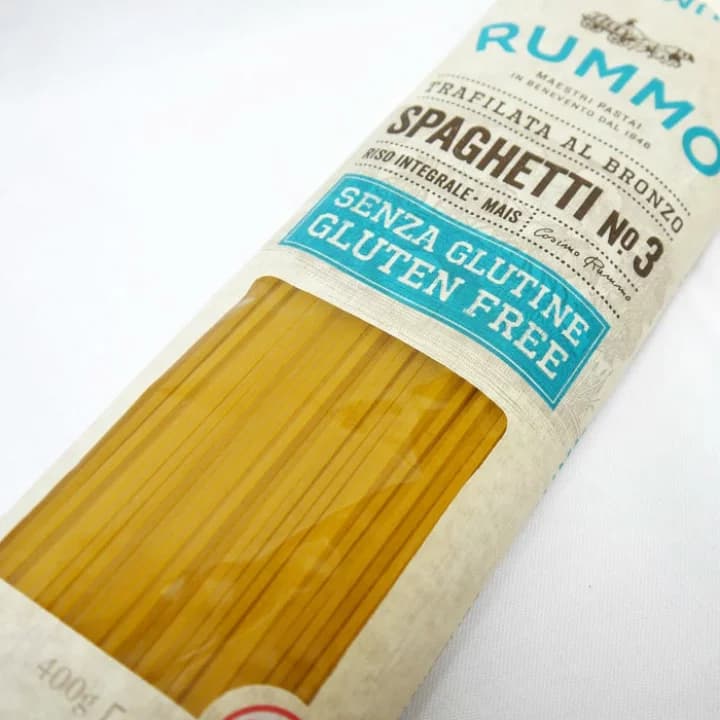
- Spaghettini (No.3): A standard size, around 1.7mm thick. Pairs with anything — tomato-based, oil-based, you name it.
- Linguine: A slightly flat noodle with an oval cross-section. An outstanding match for pesto Genovese, cream sauces, and seafood dishes.
The price runs about 400–500 yen for 500g. That's nearly double the rock-bottom supermarket pasta, but per serving it's only a difference of a few dozen yen. Consider that for those few extra coins you get restaurant-level satisfaction, and there's hardly a more affordable luxury.
| Summary: Instead of Splurging on Sauce, Change Your Noodles
image au Pay
You can buy the priciest jarred sauce, but if your noodles can't carry it, it's pointless. Conversely, if your noodles are RUMMO, even a simple pasta made with leftover vegetables, olive oil, and salt from the fridge becomes a feast.
Don't write it off as "just dried pasta." This weekend, for lunch, try boiling some RUMMO. The moment you drain it and toss it with sauce, the rising aroma of wheat and the heft transmitted through your fork will surely surprise you.