Written by: Jin Fujisaki / Published: 2026-02-13
What you usually see at a Japanese BBQ spot is, in fact, "open-air yakiniku." Thin slices of meat are placed on a grill, seared quickly over high heat, and eaten on the spot. That's delicious in its own way, but it's something completely different from what Americans think of as "Barbecue." For them, BBQ means thick steaks or whole chickens, slowly and patiently cooked over time.
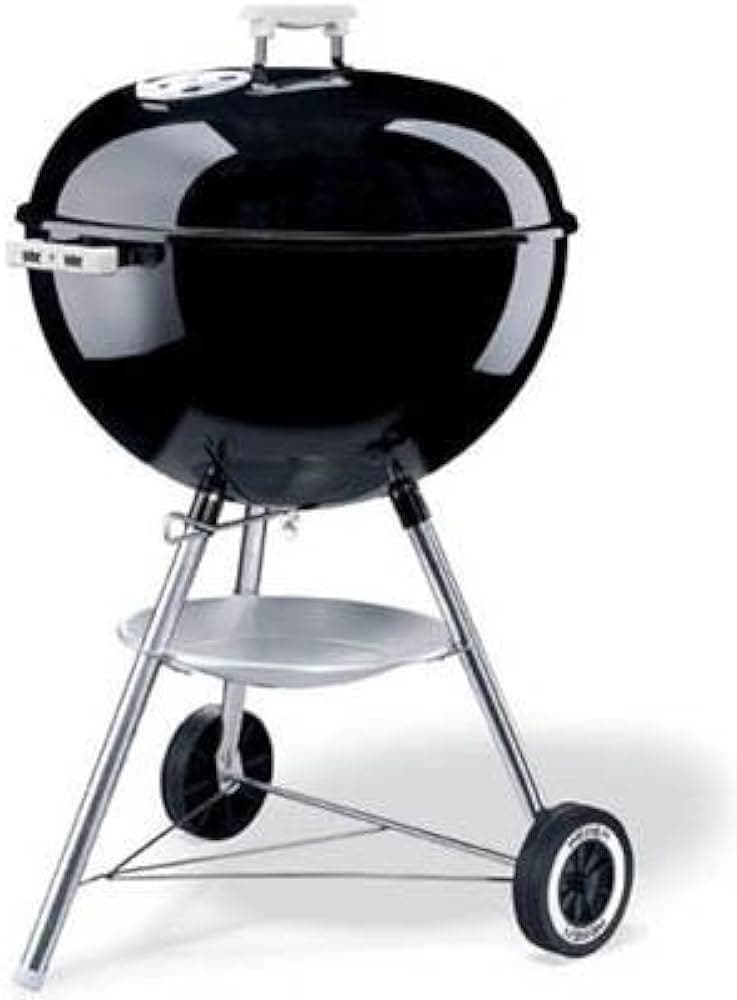
The grill that makes this possible is the "Weber," born in 1952 at a welding factory in Chicago. Its defining features are its rounded, spherical form and its "lid." That lid is the very key that transforms simple grilling into proper oven-style cooking.
| A Miracle Invention Born From a Sea "Buoy"

image Amazon
Weber's founder worked at a factory that manufactured metal buoys (the floating markers used at sea). One day, he was struggling with a problem. "When the wind blows, ash flies up and lands on the meat." "The heat isn't consistent." So he took one of the factory's buoys, cut it in half, attached legs to the bottom half, and placed the top half on as a lid.
This was the birth of the world's first kettle-shaped (spherical) grill. The lid blocks wind and rain while trapping the heat inside. This simple yet revolutionary idea spread like wildfire across American backyards. Even today, its shape has barely changed, and it reigns as the iconic image of the BBQ grill.
| Thanks to the Lid, Even Thick Cuts Cook All the Way Through

image hinata
Close the lid, and the inside of the grill becomes a "convection oven" with hot air circulating throughout. Instead of just searing the surface over an open flame, heat envelops the food from every direction.
This means that even an extra-thick steak over 5cm (2 inches) can come out crispy and aromatic on the outside while staying juicy and medium-rare on the inside. There's no need to burn it black just because you're "afraid of undercooking it." All you have to do is keep an eye on the thermometer, close the lid, and wait. Anyone can achieve restaurant-quality results without fail.
| Smoking, Pizza, and More. Your Yard Becomes a Kitchen
image ecsrn
The Weber isn't just for steaks. By arranging the charcoal cleverly (the indirect method) and adding smoke chips, you can produce authentic smoked dishes. Whole roast chickens and pizzas baked on a pizza stone come out exquisite, too.
The intensity of an open flame and the subtlety of an oven. With a Weber that combines both, your yard becomes a second kitchen. On the weekend, invite some friends over and serve up a beer can chicken (a bold dish where a chicken is cooked perched on top of a beer can) — you'll be a hero, no question about it.
| An Enameled Steel Body That Won't Rust, Even Left Out in the Rain
image Yahoo!
Doesn't a grill left out in the yard usually rust away in no time? The Weber's body is made of thick steel, with a glassy "porcelain enamel coating" baked on at over 800°C (1,470°F).
That's why it's incredibly resistant to rain and heat, and highly rust-resistant. In America, it's not unusual to see Webers from decades ago still going strong. When it gets dirty, just scrub it with a wire brush and rinse it off with water. That toughness is part of its quintessentially American charm, too.
| Summary: American Backyard Culture, Yours for Around 30,000 Yen

image PR TIMES
The price for the classic 47cm model runs around 25,000 to 30,000 yen. Compared to the thin sheet-metal grills at your local home center, that may sound expensive — but as a piece of cookware that lasts a lifetime, it's a steal.
From "yakiniku" to "BBQ." The moment you get your hands on this black sphere, the way you spend your weekends will change dramatically. Light the charcoal, lay down the meat, close the lid, and crack open a beer. Why not start enjoying that kind of rich, leisurely time right in your own backyard?