Written by: Jin Fujisaki / Published: 2026-02-12
If all you need on a camping night is brightness, nothing beats an LED lantern. Flip the switch and it lights up instantly, never gets hot, and keeps shining until the batteries die. But there's something crucial missing from that experience. It's the feeling of "controlling fire."
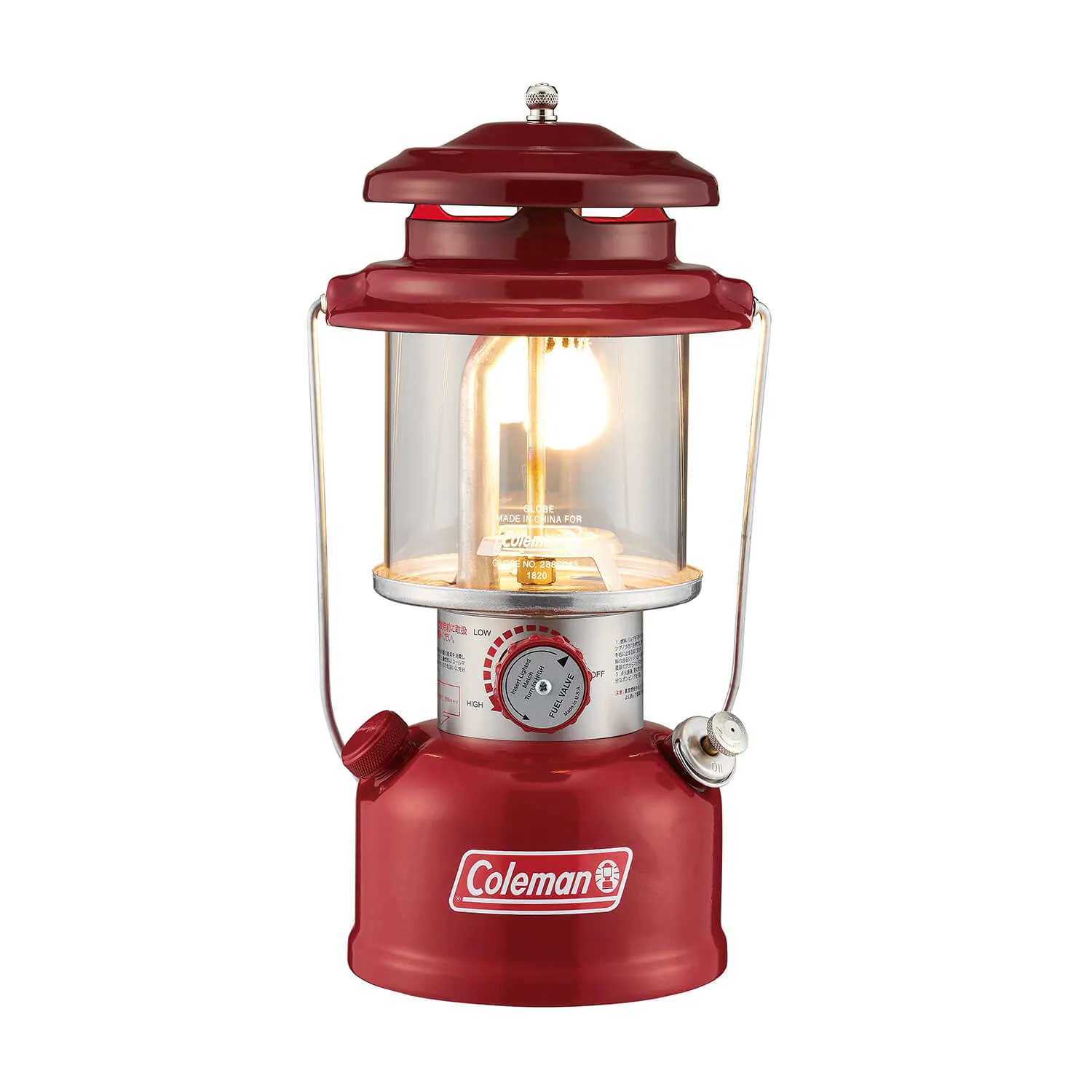
The "One Mantle Lantern 286A" from Coleman, an American company founded in 1901, has kept the same basic structure for over 100 years. The fuel is white gasoline. To light it, you have to perform the ritual of pumping (pressurizing). A hassle? Yes, the ultimate hassle. And that's exactly why it's so endearing.
| The Ignition Ritual: Pumping Air With a "Shuko, Shuko"

image Coleman official
To light this lantern, you first need to build up pressure inside the tank. Press the pump knob with your thumb and push it in dozens of times — "shuko, shuko" — until it feels firm. This process prepares the fuel to be sprayed out as a fine mist.
Then bring a flame close to the mantle (the light-emitting element) and slowly open the valve. With a "boff!" the flame catches, and gradually settles into a steady light. This whole sequence isn't just a chore — it's a mental preparation for welcoming the night. The more effort you put in, the more attachment you feel to the light it gives.
| The "Hissing" Burn Sound Is the Best Background Music
image Joinus
LED lanterns are silent. A gasoline lantern, however, makes a constant "hiss" (the sound of combustion) while burning. Some people may find this noisy.
But hearing this sound deep in a quiet forest, it strangely becomes a soothing "white noise" that calms the mind. The crackling of the campfire, and the hiss of the lantern. When those two sounds overlap, you realize you're not alone — you're spending the night together with your tools. Even when the conversation falls silent, this sound fills the gap. There's a kind of gentleness to that.
| Equivalent to 130W. So Bright You Can't Look Directly at It

image Hi-Lab
Despite its retro looks, the brightness is intense. The 286A has only "one mantle (one light-emitting element)," yet it boasts a massive output equivalent to about 130W. As a main lantern, it's more than bright enough to light up an entire campsite.
What's more, the light isn't the cold white of an LED — it has a warm, orange hue. It makes food look more appetizing and gives skin a healthier tone. For a night spent out in nature, no other color of light could be more fitting.
| The Quest for a "Birthday Lantern"
image Orange
Coleman lanterns have the year and month of manufacture stamped on the bottom of the tank. "12 95," for example, means manufactured in December 1995. Because the construction is simple and durable, the secondhand market is full of lanterns that are decades — sometimes more than 50 years — old.
Because of this, there's a culture of hunting down a "birthday lantern" made in the same year and month as yourself (or your child's birth month), restoring it, and using it. A lantern your own age, still active and casting a powerful light. To maintain it and keep using it is, in essence, to cherish the time of your own life.
| Summary: The Luxury of Buying Inconvenience

image Coleman official
A new one runs about 17,000–20,000 yen. There are fuel costs too, and the mantle (light-emitting element) is fragile and needs to be replaced periodically. The pumping is tiring, too.
But think about it. We come camping to escape from convenient living — so why would we use a convenient form of lighting? Enjoy the inconvenience. Buy the time you spend on the effort. The Coleman lantern is the finest plaything around — one that teaches grown-ups the joy of play.