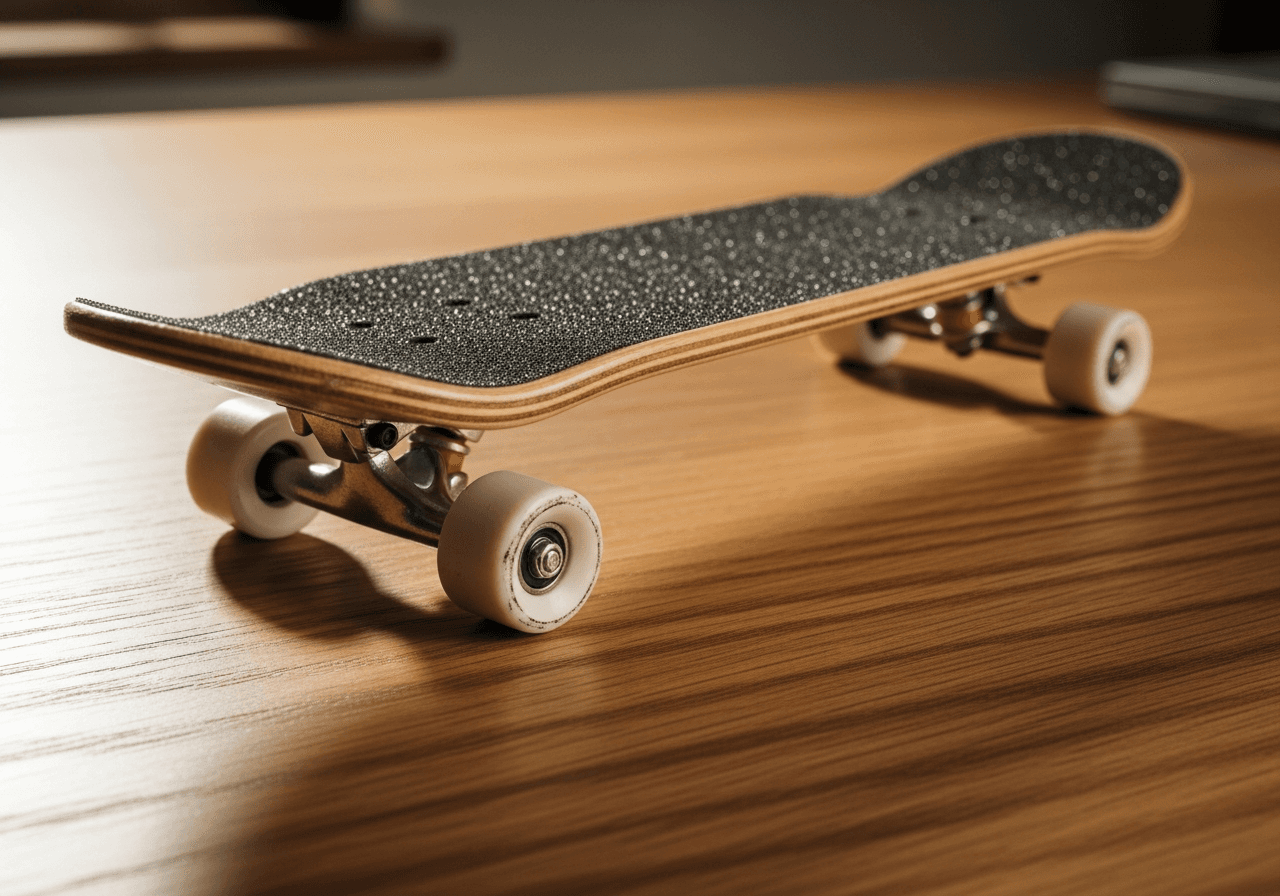
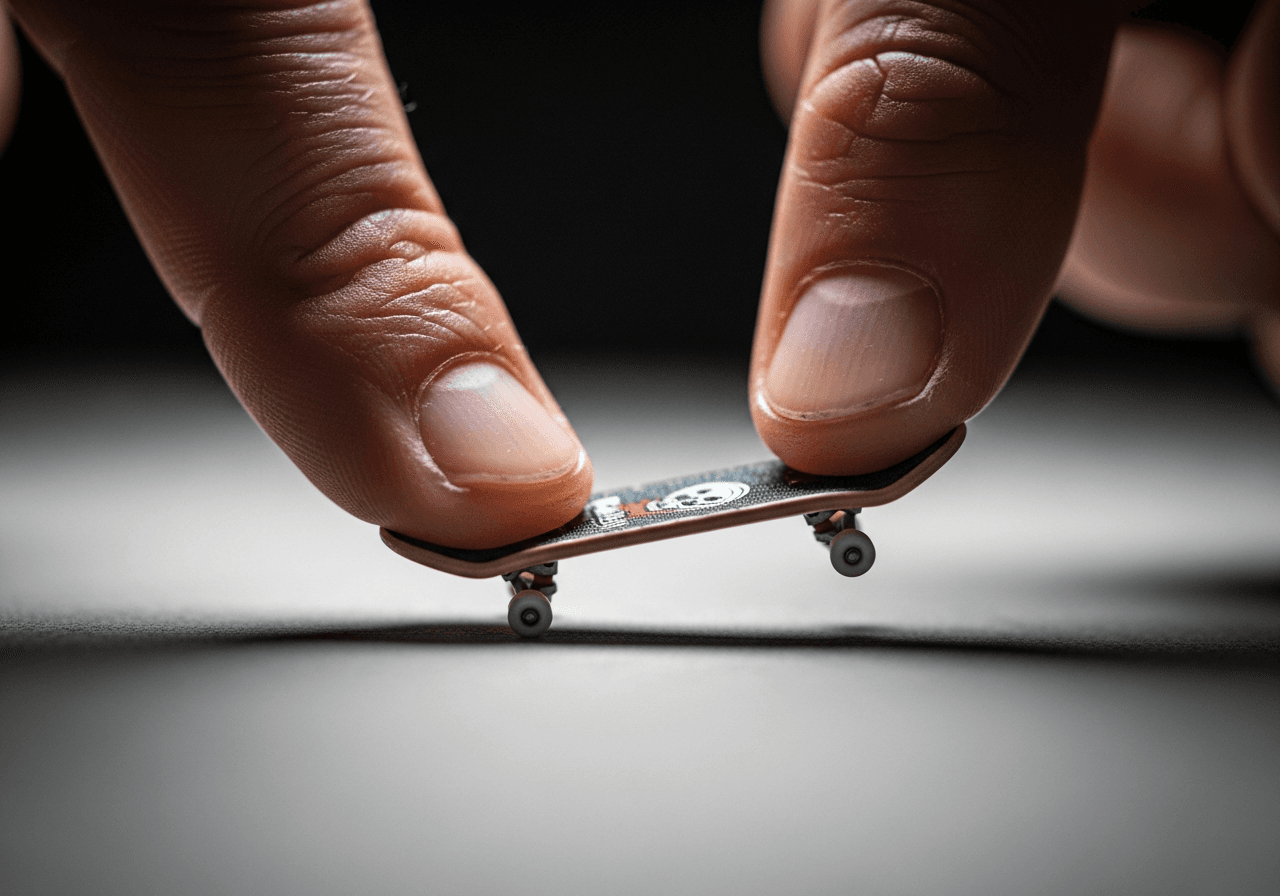
There's a second skateboard culture that lives entirely on top of a desk. The deck, the trucks, the wheels — the structure is nearly identical to a real skateboard. Only the scale is different: under 10 centimeters, ridden with two fingers instead of two feet. It's called a fingerboard.
On a rainy day, or late at night when going outside isn't an option, a desk is all you need. It offers a different kind of freedom than street skating — one that lives entirely at fingertip scale.
Two tiers: toy and pro-grade
Fingerboards split roughly into two lineages.
Mass-produced plastic models, and pro-grade models built from the same wood and structure as a real skateboard. The price and the way people play with them have developed as separate worlds.
TECH DECK is the best-known plastic line. Its deck is about 101mm wide, with metal trucks and bearing-less plastic wheels. Its appeal is collectibility — decks reproduce the graphics of real skateboard brands — and the casual accessibility of a toy you can play with even in the rain or snow.
Pro-grade models, on the other hand, press Canadian maple into the deck, just like a full-size board. The wheels carry tiny bearings, and the grip tape is made of a sponge material. The result is stronger grip and a bounce closer to a real ollie than plastic can offer.
One brand with a strong following in Japan is UAG F.B. Domestic brand HOODED and the overseas brand P-REP are among others known for their attention to materials and setup.
Deck width changes the whole play style
The first decision in choosing a fingerboard is deck width. The most popular size sits around 33mm, and going wider or narrower from there shifts what tricks come naturally.
- Wider decks: more stability, fewer failed landings
- Narrower decks: easier high-rotation tricks unique to fingerboarding
The trick vocabulary is nearly identical to full-size skateboarding. Ollies, boardslides, curb tricks, rail tricks, and multi-rotation spins can all be reproduced with nothing more than the movement of two fingers.
A shrunk-down copy of the real thing
What makes fingerboarding interesting is that it's a scaled-down copy of the exact technical system real skateboarding runs on. It's not unusual for street skaters to keep a fingerboard at home for practice and mental rehearsal. Others go the other way — learning trick names and mechanics through fingerboarding first, then picking up a real board later.
Inside that small desktop footprint sits the same physics and the same trick names as the real thing. That alone makes it a tool worth watching, even without touching it.
After landing a trick with your fingertips, when it's time for a small break, holding THE YADOM up for a breath works just as well. Small tools suit that moment of switching gears after a stretch of focus.