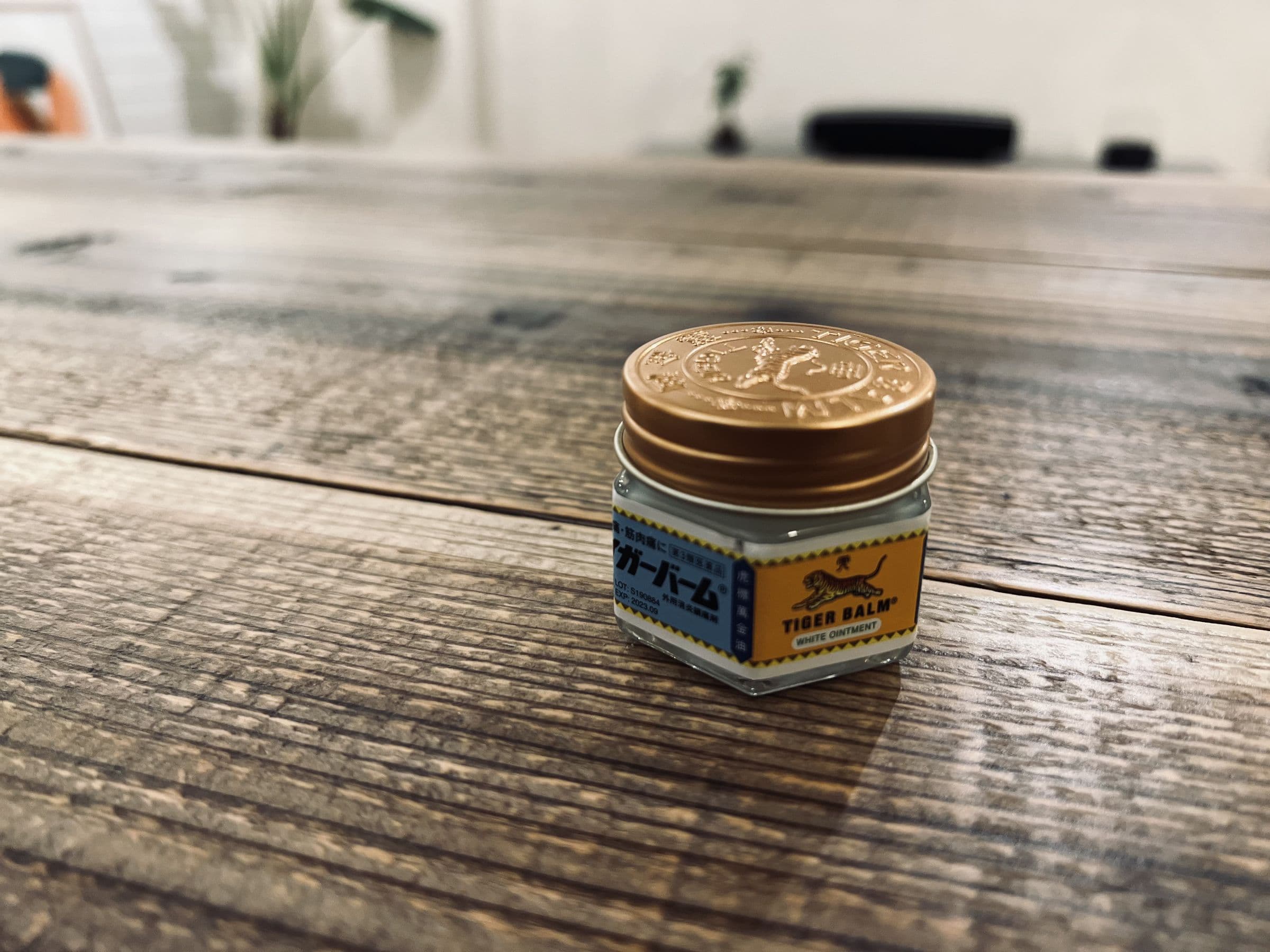
Have you heard of Tiger Balm? Maybe you've come across the term "wonder drug" but aren't sure exactly what it is. You're not alone.
Tiger Balm is an external anti-inflammatory analgesic manufactured by Haw Par Corporation in Singapore. It's sold in over 100 countries and regions worldwide and has a history spanning more than a century.
Here's what this article covers:
- What Tiger Balm is
- Tiger Balm's ingredients and benefits
- Side effects and precautions for using Tiger Balm
If you're curious about Tiger Balm, this quick read will give you a solid overview in about five minutes.
What Is Tiger Balm?
Tiger Balm is a Singapore-made external anti-inflammatory analgesic with over 100 years of history. This versatile herbal ointment addresses a wide range of conditions — from back pain and stiff shoulders to muscle pain and insect bites.
As introduced above, Tiger Balm is an external anti-inflammatory analgesic made by a Singapore-based company.
It's a popular ointment trusted for a broad range of uses including back pain, stiff shoulders, muscle pain, and insect bites.
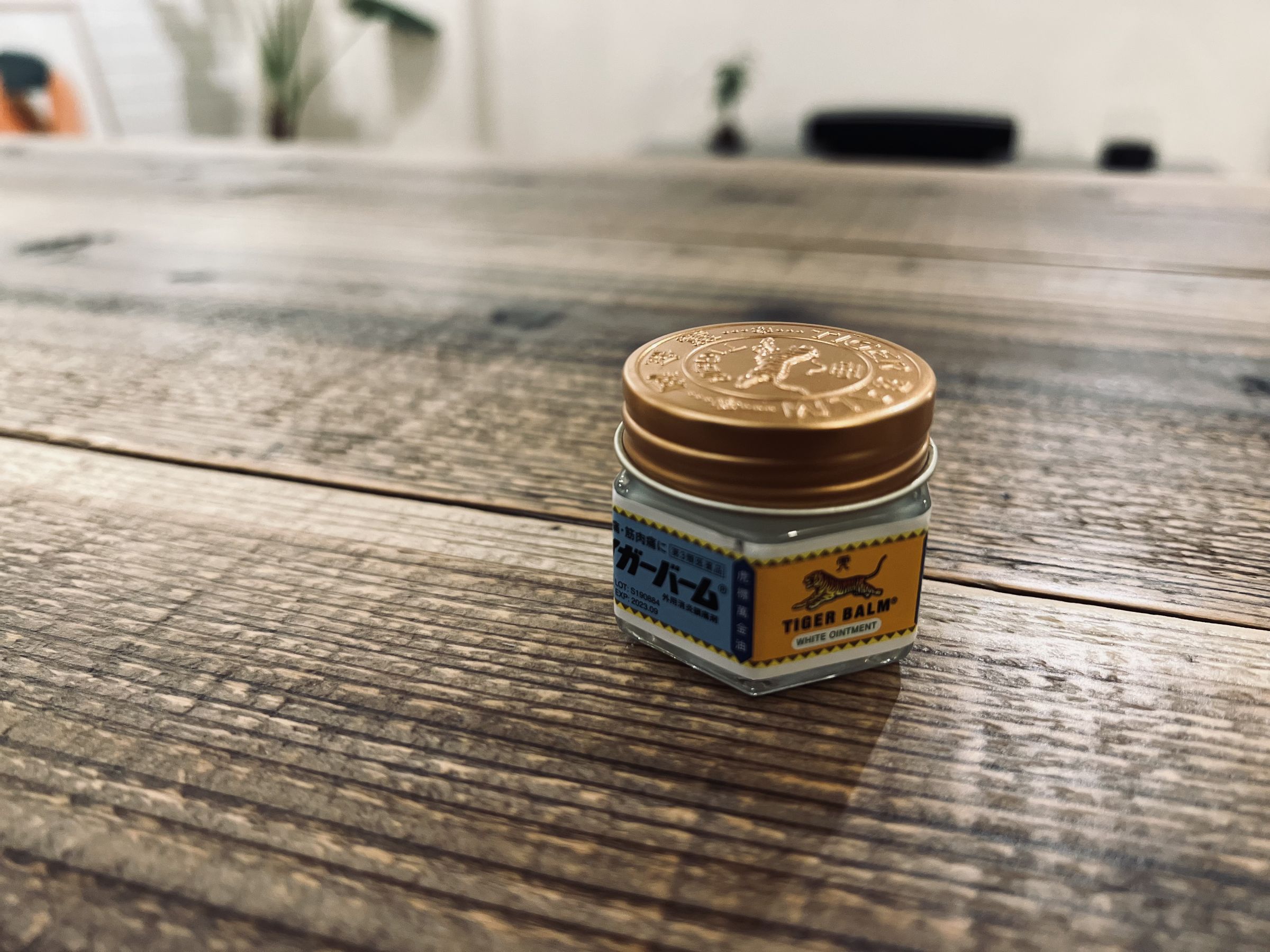
Tiger Balm is priced at 900 yen (990 yen incl. tax) for 19.4g and 1,200 yen (1,320 yen incl. tax) for 30g.
In this section, we'll look at Tiger Balm's history and the difference between Red and White.
The History of Tiger Balm
Tiger Balm's origins trace back to the 1870s. It was first developed by Aw Chu Kin, a Chinese herbalist, in Burma (present-day Myanmar). His sons, Aw Boon Haw and Aw Boon Par, are credited with bringing the modern Tiger Balm to the world.
The product name "Tiger Balm" comes from "Boon Haw" — "Haw" meaning tiger in Chinese.
In Japan, Ryukakusan Co., Ltd. served as the import and sales agent, selling a formulation adapted for Japanese skin until August 2015.
Sales were temporarily suspended, but Tiger Balm relaunched in Japan in the summer of 2019.
Today, Tiger Balm is cherished as a household remedy not only in Singapore, but across Asia and Europe as well.
Tiger Balm Red and White: Ingredients and Benefits Explained
Tiger Balm comes in two types — Red (warming and spicy) and White (cooling and refreshing). Both are external anti-inflammatory analgesics formulated with plant-derived herbal ingredients.
Did you know Tiger Balm comes in both red and white? Since the white variety is more widely recognized in Japan, Tiger Balm Red may be unfamiliar to some.
Here, we'll walk through the characteristics, ingredients, and benefits of each variety.
Tiger Balm Comes in Red and White
As mentioned, Tiger Balm is available in two types — Red and White — with White being more commonly known in Japan.
Both are external anti-inflammatory analgesics formulated with plant-derived herbal ingredients, primarily intended to relieve stiffness and pain from conditions like stiff shoulders and back pain.
In brief: Red is the warming type, giving treated areas a comforting warmth, while White is the cooling type, producing a refreshing, cooling sensation.
Ingredients in Tiger Balm Red and White
Let's take a closer look at the ingredients in each variety.
Tiger Balm Red contains:
- Camphor
- Menthol
- Cajuput oil
- Mint oil
- Clove oil
- Cassia oil (similar to cinnamon, with a distinctly spicy aroma)
Cassia oil in the Red formula is essentially the same as cinnamon, giving it its signature bold, spicy scent.
Tiger Balm White contains:
- d-Camphor
- Peppermint oil
- Eucalyptus oil
- l-Menthol
- Clove oil
- *Additives: Vaseline, Paraffin
The key difference from Red is the inclusion of peppermint oil and menthol, which gives White its characteristic cooling freshness.
If you enjoy a cool, refreshing sensation, White is the way to go.
Benefits of Tiger Balm Red and White
Tiger Balm Red, through its warming effect, is used for stiff shoulders, back pain, muscle pain, bruises, and sprains.
To use: massage a small amount of Tiger Balm Red into the affected area to experience a comforting warmth.
Tiger Balm White, thanks to its peppermint oil and menthol, is effective for nasal congestion, insect repellent, neuralgia, and rheumatism.
The peppermint oil and menthol also give your mood a refreshing lift.
Application method is the same as Red: massage it gently into the affected area.
Tiger Balm Side Effects and Precautions
Even as a trusted remedy, Tiger Balm should never be applied around the eyes, on mucous membranes, open wounds, or areas with eczema. Those with sensitive skin should be aware of potential reactions such as rashes or irritation.
While Tiger Balm is known as a versatile remedy, there are important precautions to keep in mind.
First, avoid applying Tiger Balm to:
- Around the eyes and mucous membranes
- Open wounds, irritated skin, or areas with eczema
Do not apply to any of the above areas.
Additionally, people with sensitive skin may experience side effects such as rashes, redness, itching, or irritation. Take care when using Tiger Balm if your skin tends to react.
Summary
Tiger Balm has earned its place as a trusted remedy with over 100 years of history and distribution in 100+ countries. Use Red (warming) or White (cooling) based on your symptoms — and make the most of everything this ointment has to offer.
Tiger Balm is a time-tested wonder drug with over a century of history, trusted by people all over the world.
It's a versatile ointment that addresses a wide range of conditions including stiff shoulders, back pain, muscle pain, neuralgia, nasal congestion, and insect bites.
Tiger Balm White — the more popular choice in Japan — contains peppermint oil and menthol, offering not just relief but also a refreshing mood boost.
Just be mindful of the areas where Tiger Balm should not be applied, and those with sensitive skin should use it with caution. Used correctly, Tiger Balm is a remarkably effective remedy worth having on hand.