Written by: Jin Fujisaki / Published: 2026-07-23
In the middle of desk work, you suddenly notice your hands have gone completely cold. Wrapping both hands around a mug helps, but only for the few minutes before the coffee cools down. And if you forgot to charge your electric hand warmer, that's the end of that.
But what if a piece of ceramic, warmed in the microwave for just 30 seconds, could keep gently warming your hands for 10 to 15 minutes? And what if what's inside it isn't a battery or a gel pack, but azuki beans you'd find in any kitchen?
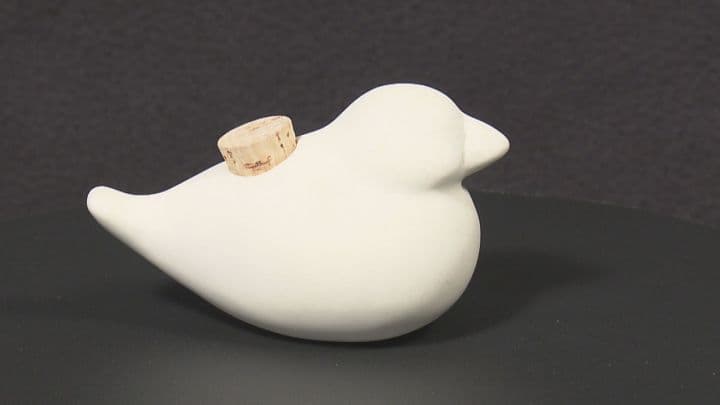
TETANPO is a ceramic hand warmer created by MM Yoshihashi Co., Ltd., a company in Seto City, Aichi Prefecture, that has crafted plaster molds for Seto ware across three generations. It's not just a cold-weather accessory — it's a small pause button, one that stops your hands with the weight of azuki beans and the texture of ceramic.
| Inside: 50g of Azuki Beans. The Mechanism Is Simply Microwave Heating
The mechanism behind TETANPO itself is remarkably simple. The body is a hollow piece of ceramic, and you pour the included 50g of azuki beans in through a cork-stoppered hole on its back. When heated in the microwave, the azuki beans act as a heat-retaining material, and the warmth spreads slowly throughout the entire ceramic body.
As a rough guide, at 500W, 30 seconds of heating lasts about 10 minutes, and 40 seconds lasts about 15 minutes. At 600W, 20 seconds lasts about 10 minutes and 30 seconds lasts about 15 minutes. The ceramic gets quite hot immediately after heating, so care should be taken to avoid burns when touching it with bare hands. Since the azuki beans can be reheated and reused, there's no need to keep buying replacements the way you would with disposable body warmers.
| Why Is the Hole on the "Back" Instead of the "Head"?
When making hollow ceramics, a hole is normally opened at the tip or the bottom. This is so that, during the molding process at the kiln, any excess clay slip left inside the mold can be drained out. According to Kenichi Yoshihashi, the plaster mold craftsman, the hole for inserting the azuki beans was originally placed at the top of the bird's head during TETANPO's prototype stage.
But having a cork sitting on top of the head undermined the cuteness of the design. They arrived at the conclusion that "a round head is cuter, after all," and the designer and Yoshihashi made an unprecedented change for ceramic making: moving the hole to the back, neither the tip nor the bottom. In a plaster mold, after the clay slip is poured in, the plaster itself absorbs the moisture and the piece hardens from the inside out. If the position of the hole shifts, this process itself no longer works. Through repeated trial and error among the designer, the plaster mold craftsman, and the kiln, it took about two years to achieve this rounded form.
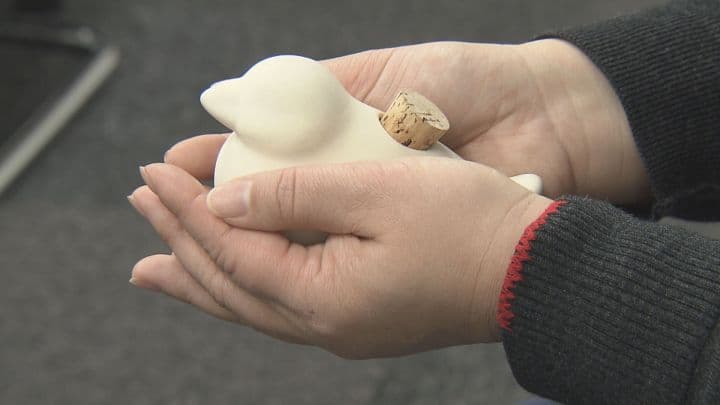 image 東海テレビNEWS
| A Weight and Warmth That Fit in Your Palm Stop Your Hands at Work
The ceramic body of TETANPO measures 67mm wide x 120mm long x 67mm deep, and weighs about 115g when dry (azuki beans not included). When cupped in both hands, the weight of the azuki beans presses down not just on the fingertips but across the whole palm. This simple sensation of "being heavy" is enough to stop a hand that was midway toward reaching for a smartphone or mouse during work.
The moment it's heated, a faint scent of azuki beans rises as well. There's nothing visually flashy about it, but the matte texture of the unglazed ceramic, its palm-sized fit, and the smell of the beans all quietly combine to draw your attention to your hands for as long as you're holding it. A member of the development team commented, "We'd like people to use it when they want to relax, or when they just want to space out and do nothing."
| A Java Sparrow Motif, and a Commitment to Roundness
The first TETANPO takes the form of a plump Java sparrow. The designer herself is a bird lover who keeps a parakeet, and it was through this "bird connection" that the Java sparrow was chosen as the motif. It was designed with the rounded, daifuku-like shape a bird takes when it relaxes and tucks its neck in mind.
The fullness of the cheeks and the roundness of the body were adjusted through repeated prototyping. The aim was a delicate balance that wouldn't look too far off from an actual bird to bird lovers, while also avoiding being overly realistic. Left unglazed, the surface has a matte, dry-to-the-touch finish. In 2025, a second TETANPO arrived in the shape of a curled-up hedgehog.
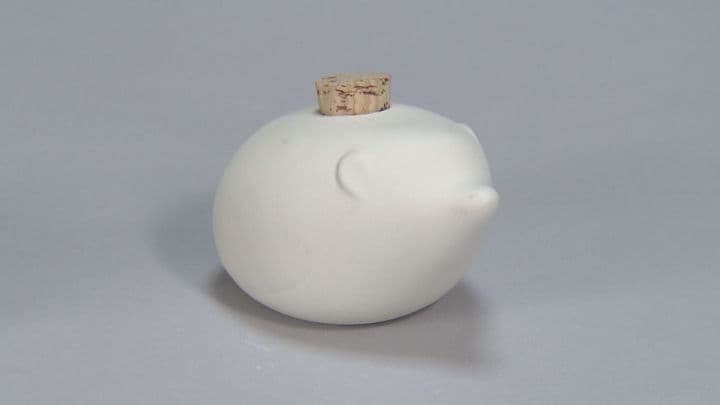 image 東海テレビNEWS
| Price and Who It's For
Prices vary by retailer, ranging from about 3,960 to 4,400 yen (tax included), with several direct-sales sites showing 4,400 yen as of July 2026. It comes with 50g of azuki beans, a cork stopper, and a drawstring pouch. Sales are mostly handled through irregular online reservations, though it's also stocked at select general goods stores in Seto City, and it's not unusual for stock to sell out shortly after an announcement.
TETANPO is recommended for people like these:
- People whose hands tend to get cold during desk work
- People who want an easy source of warmth from the microwave, without using electricity
- People who don't want to keep buying disposable items like body warmers
- People who want to build a habit of consciously pausing their hands between tasks
| In Summary: Heat It for 30 Seconds, Stop Your Hands for Just 15 Minutes
What TETANPO solves may be less the coldness of your hands themselves than the habit of "just continuing to work without stopping." Thirty seconds in the microwave, and after that, the ceramic and the azuki beans take care of creating a 15-minute break on their own.
The next time you notice your hands are cold, try setting the microwave timer to 30 seconds before you go looking for an outlet.